
CONDITIONS · MARYLAND & VIRGINIA
Pain While Walking
Leg pain while walking can come from reduced arterial blood flow, but muscles, joints, nerves and the spine can produce similar limitations. The timing and recovery pattern help guide the evaluation.
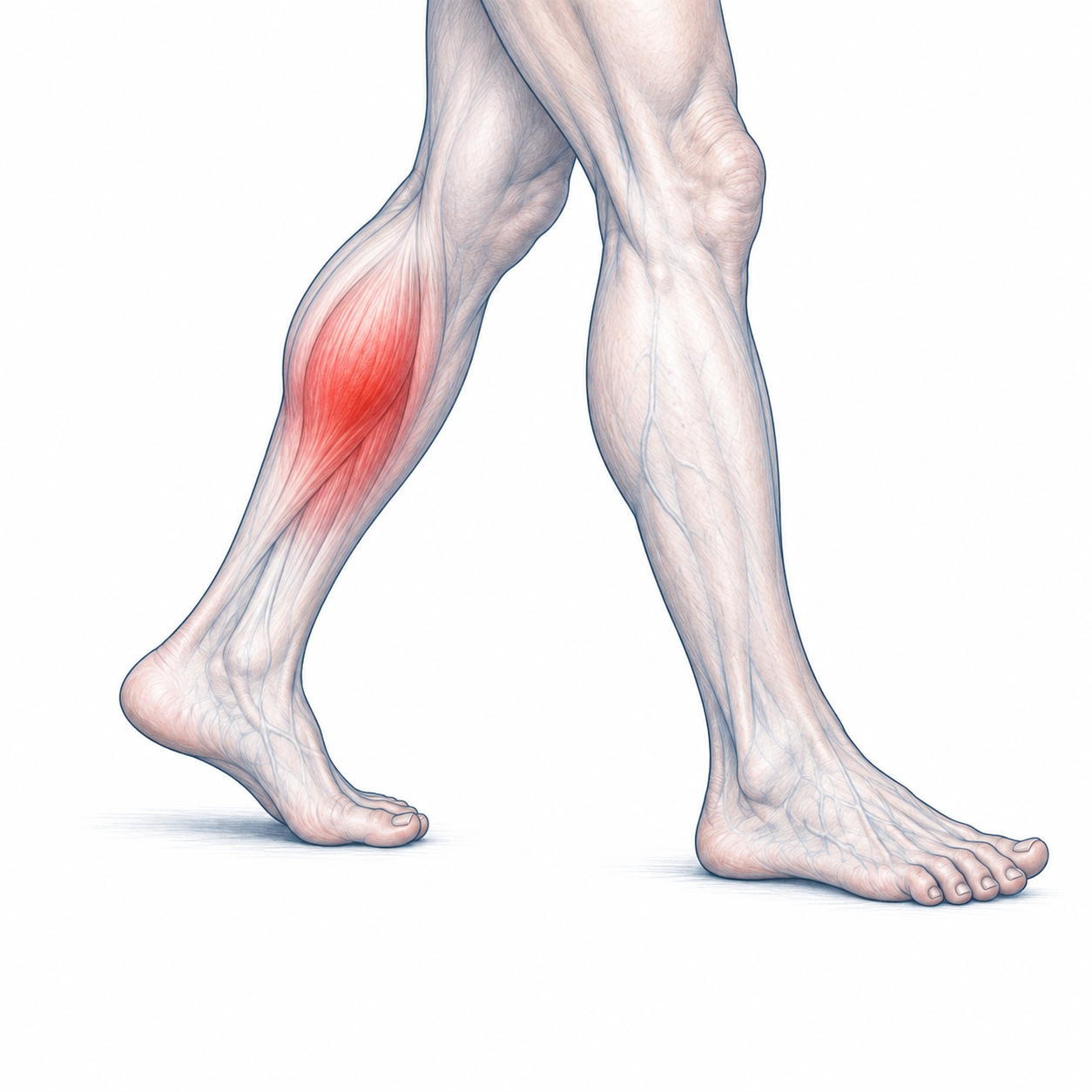
What causes leg pain while walking?
Pain while walking is a symptom rather than a diagnosis. Peripheral artery disease (PAD) can reduce blood flow to working leg muscles, but arthritis, spinal or nerve problems, muscle strain and foot mechanics can also make walking painful. An evaluation looks at where discomfort occurs, what brings it on and what makes it stop.
What is intermittent claudication?
Intermittent claudication is aching, cramping, heaviness, fatigue or weakness caused by inadequate blood flow during activity. It often begins in the calf, thigh or buttock after a repeatable amount of walking, improves after a few minutes of rest and returns when activity resumes. Not every person with PAD has this classic pattern.
What details help distinguish the cause?
- Where the discomfort begins and whether one or both legs are affected.
- Whether symptoms start after a similar walking distance and improve by simply stopping.
- Whether sitting, bending forward or changing position is needed for relief, which may suggest a nonvascular cause.
- Whether there is a cold or discolored foot, numbness, pain at rest or a wound that is slow to heal.
How is walking-related leg pain evaluated?
Your clinician reviews the activity pattern, checks pulses and examines the legs and feet. An ankle-brachial index may compare ankle and arm pressures, sometimes before and after exercise. Duplex ultrasound or other imaging may be considered if the examination and initial testing suggest a vascular cause. Different findings may lead to a nerve, joint or spine evaluation instead.
How is claudication treated when PAD is confirmed?
Treatment commonly includes cardiovascular risk management, prescribed medicines and a structured walking program. A procedure may be considered when symptoms remain meaningfully limiting despite appropriate care or when blood flow threatens the limb. The diagnosis and your goals should guide the plan; a stent is not the automatic next step.
Prepare for your appointment
- Record approximately how far or how long you walk before symptoms begin.
- Note whether stopping alone relieves the pain and how quickly it returns.
- Bring previous vascular or spine imaging and a current medication list.
- Explain how the limitation affects shopping, stairs, work, exercise and everyday independence.
More about this concern
Your questions, answered.
Is pain while walking always caused by PAD?
No. PAD is an important vascular cause, but joint, muscle, nerve, spine and foot conditions may create similar symptoms. The pattern, examination and selected testing help distinguish them.
Should I push through new leg pain?
New, severe or unexplained symptoms should be assessed first. A structured walking program for diagnosed PAD is different from trying to exercise through an undiagnosed problem.
Does walking pain mean I need a stent?
No. A diagnosis and discussion of medical care, structured exercise and your goals come before deciding whether a procedure is appropriate.
What if the pain continues when I am resting?
Foot or leg pain at rest, especially with coldness, color change or a nonhealing wound, needs prompt medical assessment because it may signal more severe circulation loss.
Let’s talk about your next step.
Our team can help you choose an office in Maryland or Virginia and confirm where your evaluation or procedure will take place.
Patient education sources
General educational information, not a diagnosis or an individual treatment recommendation. Your clinician can explain which options are appropriate for you.