
TREATMENTS & PROCEDURES · MARYLAND & VIRGINIA
Angioplasty & Stenting
Peripheral angioplasty and stenting are catheter-based options for selected narrowed or blocked arteries. Learn when they may be considered for PAD, what happens during treatment and why ongoing vascular care remains important.
What are peripheral angioplasty and stenting?
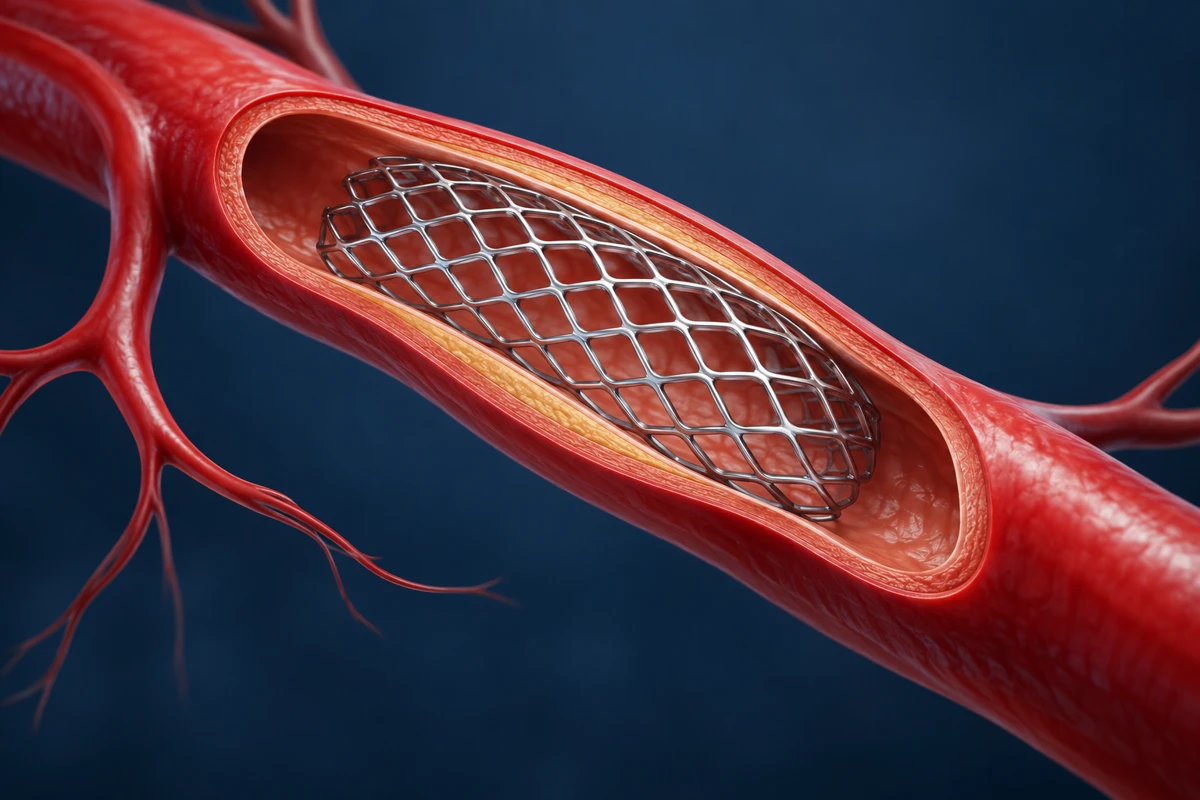
Angioplasty uses a small balloon inside an artery to widen a narrowed or blocked area. A stent is a mesh support that may be placed to help keep the vessel open. This page focuses on peripheral arteries, such as those supplying the pelvis and legs, rather than coronary heart procedures.
When may angioplasty or a stent be considered?
A clinician may consider treatment when PAD meaningfully limits walking despite appropriate medical care and structured exercise, or when poor blood flow contributes to rest pain or threatens tissue. The location and length of disease, other health conditions and goals of care shape the recommendation. Continued medical care or bypass surgery may be alternatives.
What happens during treatment
Through a small access site, a clinician guides a catheter using imaging. The balloon treats the narrowed segment; a stent may be added if appropriate. The access site is then closed or compressed, and you are monitored afterward.
Plan before procedure day
Ask about the exact treatment, anesthesia, facility, transportation and expected observation period. Report kidney disease, contrast reactions, pregnancy possibility and all medicines. Obtain individualized instructions for eating, drinking and medicines; do not stop prescribed blood thinners on your own.
Recovery and ongoing care
Activity restrictions and the return to driving or work depend on the access site and treatment. Keep follow-up appointments and take prescribed medicines as directed. Ask whom to call after hours. Improving one blockage does not cure the underlying tendency to develop arterial disease.
Benefits and risks to discuss
The goal may be improved walking or blood supply to threatened tissue. Risks include access-site bleeding, vessel injury, clotting, contrast-related problems and narrowing again. Additional treatment may be needed. Ask how those risks compare with your alternatives.
More about this concern
Your questions, answered.
Is a stent always necessary?
No. Whether a stent is needed depends on the artery, the blockage and the result of balloon treatment.
Does angioplasty cure peripheral artery disease?
No. It treats a specific area of reduced blood flow but does not remove the underlying tendency toward atherosclerosis. Medicines, tobacco cessation, exercise when appropriate and follow-up remain important.
How is angioplasty different from bypass surgery?
Angioplasty reaches the blockage through a catheter and treats it from inside the vessel. Bypass surgery creates a new route around the blockage. Anatomy, symptoms, health and treatment goals help determine which options are reasonable.
Can I go home the same day?
Some people can, while others need hospital observation. Confirm the plan for your procedure and arrange the recommended help at home.
Let’s talk about your next step.
Our team can help you choose an office in Maryland or Virginia and confirm where your evaluation or procedure will take place.
Patient education sources
General educational information, not a diagnosis or an individual treatment recommendation. Your clinician can explain which options are appropriate for you.