
TREATMENTS & PROCEDURES · MARYLAND & VIRGINIA
Vascular Evaluation & Diagnostic Testing
Vascular testing can help determine whether symptoms involve the arteries, veins or another cause. Learn how an examination, ankle and toe pressures, duplex ultrasound and selected imaging guide the next step.
What is a vascular evaluation?
A vascular evaluation brings together your symptoms, medical history, examination and appropriate testing. It can help distinguish an artery problem from a vein problem and guide whether treatment, monitoring or another evaluation is needed.
When is vascular testing considered?
Walking-related leg pain, one-sided or persistent swelling, a nonhealing wound, known carotid disease, dialysis-access concerns or a change after prior vascular treatment may lead to testing. Not everyone needs every test. Your clinician should explain the question a test is intended to answer.
Common vascular tests and what they show
- Ankle-brachial index (ABI): compares ankle and arm blood pressures to screen for reduced arterial circulation in the legs.
- Toe pressures and pulse-volume recordings: can add information about blood flow to the foot and toes when appropriate.
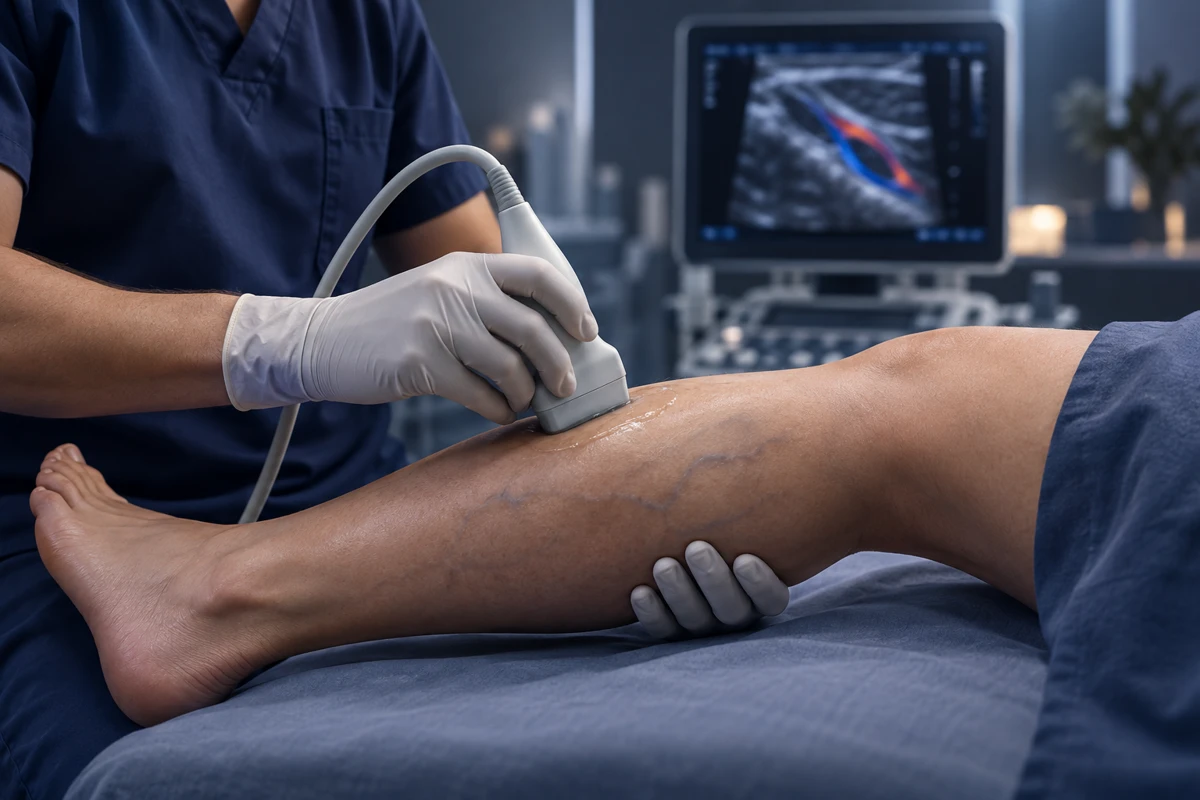
- Duplex ultrasound: uses sound waves to view vessels and assess blood flow, including narrowing, clots or abnormal vein-valve function.
- Additional imaging: CT angiography, MR angiography or catheter angiography may be recommended when more detail is needed for a specific treatment decision.
Before your appointment
Bring previous vascular reports and an up-to-date medication list. Ask which test is planned and whether it needs any special preparation. Describe where symptoms occur, how long they last and what changes them.
During testing and afterward
An ultrasound probe moves over gel on the skin; pressure cuffs may be used for an ABI. These noninvasive tests generally do not require recovery time. Other imaging may involve contrast, radiation or catheter access, so preparation and risks differ. Ask how and when results will be explained.
What a test cannot tell you alone
Ultrasound does not use ionizing radiation, but images can have limitations. A result must be interpreted alongside your symptoms and examination. A reassuring test for one problem does not automatically explain every symptom.
More about this concern
Your questions, answered.
Will my visit include a procedure?
An evaluation is not a commitment to treatment. Ask the office what is scheduled and whether testing and consultation will take place on the same day.
Do I need to fast before vascular testing?
Preparation depends on the exact test and the area examined. Follow the instructions for your appointment rather than assuming every ultrasound requires the same preparation.
Does an ABI or vascular ultrasound hurt?
These tests are noninvasive. Pressure cuffs can feel tight and an ultrasound probe may apply pressure over a tender area, but no incision is used.
How long does vascular testing take?
Timing depends on the test and how many areas are examined. Ask the office which study is scheduled, how long to allow and whether you will discuss results the same day.
Let’s talk about your next step.
Our team can help you choose an office in Maryland or Virginia and confirm where your evaluation or procedure will take place.
Patient education sources
General educational information, not a diagnosis or an individual treatment recommendation. Your clinician can explain which options are appropriate for you.