
When Calf Pain Is Vascular: Warning Signs, Diagnosis, and Treatment Options
Learn how to recognize vascular calf pain, including warning signs of PAD, venous insufficiency, and DVT, and when to seek specialist evaluation.

When Calf Pain Means More Than a Muscle Cramp
You’ve been walking through the grocery store when a familiar ache develops in your calf. You stop for a few minutes, the discomfort fades, and you continue shopping. The next time you walk a similar distance, it happens again.
It’s easy to assume the problem is muscle fatigue or aging. But recurring calf pain, especially when it follows a predictable pattern, may be your body’s way of signaling a circulation problem.
The calf muscles rely on a healthy network of arteries and veins. When blood cannot reach the muscles efficiently or return properly toward the heart, discomfort may develop. Conditions such as Peripheral Artery Disease (PAD), Chronic Venous Insufficiency (CVI), and Deep Vein Thrombosis (DVT) can all cause calf pain, although their symptoms and treatments differ considerably.
Understanding those differences can help you recognize when a vascular evaluation is necessary.
Peripheral Artery Disease: When Blood Flow to the Calf Is Restricted
One of the most recognizable vascular causes of calf pain is Peripheral Artery Disease. PAD develops when plaque accumulates inside the arteries, narrowing the pathways that deliver oxygen-rich blood to the legs.
During physical activity, your calf muscles need more oxygen. If narrowed arteries cannot deliver enough blood to meet that demand, discomfort may develop. This is known as intermittent claudication.
Patients frequently describe cramping, tightness, aching, or fatigue that begins while walking and improves within several minutes of resting. As PAD progresses, some people find themselves stopping more frequently or struggling to walk distances they once managed comfortably.
PAD may also cause cold feet, skin color changes, reduced pulses, or slow-healing wounds. More advanced disease can produce pain even at rest, particularly in the feet.
Because PAD is associated with increased cardiovascular risk, identifying it matters beyond relieving calf discomfort.
Chronic Venous Insufficiency: When Blood Pools in the Lower Legs
Not all vascular calf pain results from blocked arteries.
Your veins contain valves that help blood return toward the heart. When these valves weaken or stop functioning properly, blood may collect in the lower legs, creating increased venous pressure.
This condition, called Chronic Venous Insufficiency, commonly causes aching, heaviness, swelling, or a tired sensation in the calves.
Unlike typical PAD-related claudication, venous discomfort often becomes more noticeable after prolonged standing or sitting. Patients may experience some relief after walking or elevating their legs.
Over time, venous insufficiency can contribute to varicose veins, ankle swelling, skin discoloration, and venous leg ulcers.
Recognizing the difference between an arterial problem and a venous problem is important because the appropriate treatments are not always the same.
Deep Vein Thrombosis: A Serious Cause of Calf Pain
A more urgent cause of calf discomfort is Deep Vein Thrombosis (DVT), which occurs when a blood clot forms in a deep vein, often in the leg.
DVT may cause pain or tenderness, swelling, warmth, or reddish or discolored skin. Symptoms frequently affect one leg, although some people have few or no noticeable symptoms.
Unlike gradual circulation problems, a suspected blood clot requires prompt medical evaluation because part of the clot can travel to the lungs and cause a potentially life-threatening pulmonary embolism.
New calf pain accompanied by unexplained swelling, warmth, or discoloration should be assessed urgently. Sudden shortness of breath, chest pain, coughing blood, or fainting requires emergency medical care.
This is not a condition to manage independently with stretching, massage, or compression stockings before receiving a diagnosis.
How Vascular Specialists Identify the Cause of Calf Pain
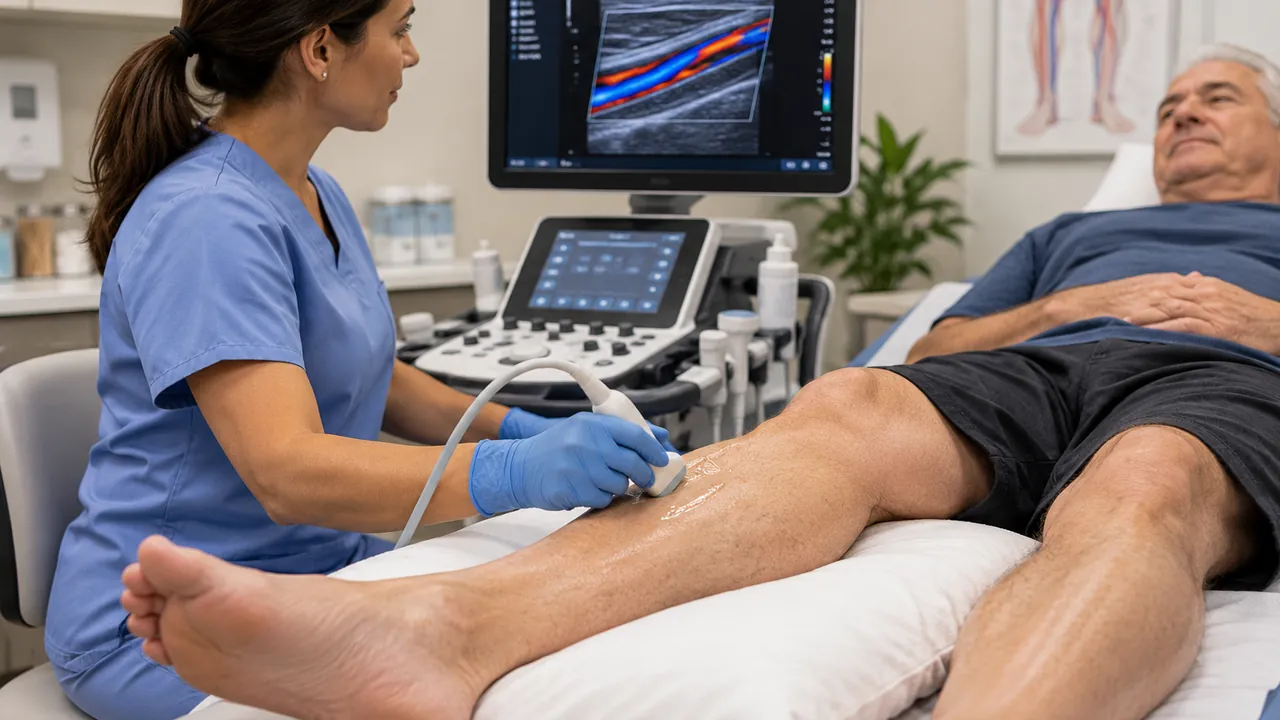
Because several conditions can produce similar symptoms, determining the cause of calf pain begins with understanding how and when the discomfort occurs.
A vascular specialist may ask whether pain appears during walking, after standing, or while resting. Other important details include swelling, skin changes, medical history, smoking, diabetes, and cardiovascular risk factors.
The physical examination often includes checking pulses, temperature, skin appearance, and signs of swelling.
When PAD is suspected, an Ankle-Brachial Index (ABI) test compares blood pressure measurements in the ankles and arms. Arterial duplex ultrasound can provide additional information about blood flow and narrowing within the arteries.
For suspected venous disease, a venous duplex ultrasound can evaluate vein function and help identify blood clots or abnormal blood flow. Additional imaging may be recommended when more detailed information is necessary.
These tests help specialists distinguish between conditions that may feel similar but require very different treatment plans.
Treatment Options for Vascular-Related Calf Pain
Successful treatment begins with addressing the underlying vascular condition rather than simply reducing the sensation of pain.
For PAD, initial management commonly includes prescribed medications, smoking cessation, cholesterol and blood pressure management, diabetes control, and structured exercise therapy. Supervised walking programs can improve walking ability and quality of life for many patients.
When PAD significantly limits everyday activities despite appropriate treatment, or when severely reduced circulation threatens the leg, a specialist may consider revascularization. Minimally invasive options such as angioplasty and stenting can improve blood flow in selected patients.
Venous insufficiency may require a different approach, including appropriate compression therapy, leg elevation, physical activity, and treatment of problematic veins when indicated. Compression should be recommended carefully when significant arterial disease may also be present.
DVT typically requires anticoagulant medication and, in selected circumstances, additional interventions. Treatment decisions depend on the clot’s location, severity, and the patient’s overall health.
There is no universal treatment for calf pain. An accurate diagnosis is what makes an effective, individualized approach possible.
Why Early Evaluation Can Protect Your Long-Term Vascular Health
Waiting until calf discomfort becomes unbearable can allow an underlying vascular condition to progress.
For patients with PAD, untreated circulation problems may gradually limit mobility and, in advanced cases, contribute to nonhealing wounds or tissue damage. Chronic venous disease may lead to persistent swelling, skin changes, and ulcer formation.
Early evaluation helps patients understand their symptoms, manage risk factors, and consider appropriate treatment before complications develop.
It can also provide something many patients have been missing: a clear explanation for why their legs hurt.
Personalized Calf Pain Treatment at Washington Vascular Specialists

At Washington Vascular Specialists, evaluating calf pain means looking beyond the symptom to understand the health of the patient’s circulation.
The practice’s team includes Mubashar Choudry, MD, FACC, who specializes in endovascular intervention and interventional cardiology, alongside vascular surgeons Donald Wilkerson, MD, and Sajid Shah, MD, and cardiovascular and thoracic surgeon Andrei Gursky, MD.
With expertise in Peripheral Artery Disease, leg pain and cramping, vascular conditions, and minimally invasive treatment, the team develops personalized care plans based on each patient’s symptoms and medical needs.
Washington Vascular Specialists serves patients at six locations: Takoma Park, Frederick, Upper Marlboro, Baltimore, and Germantown, Maryland, and Fairfax, Virginia.
Whether discomfort occurs during a short walk or has begun interfering with everyday activities, identifying the cause is the first step toward appropriate treatment.
Find Out What's Causing Your Calf Pain
You shouldn’t have to plan your day around how far you can walk before your legs begin to hurt.
If calf pain repeatedly interrupts your activities, worsens over time, or occurs alongside circulation-related symptoms, consider speaking with a vascular specialist. Early diagnosis may help preserve mobility, manage vascular disease, and protect your long-term health.
Washington Vascular Specialists can help you understand whether your calf pain is related to poor arterial circulation, venous disease, or another underlying problem.
Call 301-891-2500 or request an appointment online to take the next step toward understanding your symptoms and finding an appropriate treatment plan.
Frequently Asked Questions About Vascular Calf Pain
How do I know if calf pain is caused by poor circulation?
Calf pain that repeatedly develops during walking and improves with rest can suggest PAD. Pain associated with swelling or heaviness after prolonged standing may indicate venous disease. Symptoms alone cannot confirm the diagnosis, so vascular testing may be needed.
Can a blocked artery cause calf cramps?
Yes. When PAD restricts blood flow, exercising muscles may not receive enough oxygen-rich blood, producing cramping, aching, or fatigue. This discomfort is commonly called claudication.
Is calf pain with swelling a sign of a blood clot?
It can be. DVT may cause calf pain, swelling, tenderness, warmth, or skin discoloration. New or unexplained symptoms should receive prompt medical evaluation.
Can vascular calf pain be treated without surgery?
Often, yes. Depending on the diagnosis, treatment may involve medication, structured exercise, risk-factor management, leg elevation, or appropriate compression. Some patients benefit from minimally invasive vascular procedures.
When should I see a vascular specialist for calf pain?
Consider a vascular evaluation when pain repeatedly occurs during walking, worsens over time, limits daily activities, or accompanies persistent swelling or skin changes. Sudden severe leg pain with a cold, pale, or numb foot is an emergency. Suspected DVT also requires urgent assessment.
Related Vascular Health Topics
For patients who want to learn more, these Washington Vascular Specialists articles offer additional guidance:
- How Poor Circulation Contributes to Calf Pain
- The Connection Between Calf Pain and Venous Insufficiency
- Exercises to Alleviate Leg Cramping and Improve Vascular Health
- Minimally Invasive Procedures for Peripheral Artery Disease
More in this topic
View all →
Exercises to Alleviate Leg Cramping and Improve Vascular Health
Learn how walking, calf raises, ankle pumps, and gentle stretching may support circulation—and when leg cramps need a vascular evaluation.
Read article →
The Importance of Elevating Your Legs to Reduce Swelling and Improve Circulation
Leg swelling is a common condition that affects millions of people each year. While it may develop after a long day of standing or sitting, persistent swelling is often a sign that your circulatory…
Read article →
Overcoming Walking Pain: Success Stories and Tips for Lasting Relief
Walking is one of the most basic activities we perform every day, yet for many people, it becomes a source of frustration and discomfort. Walking pain can affect your ability to work, exercise, spend…
Read article →