Understanding Peripheral Artery Disease and Your Treatment Options
If walking to the mailbox, climbing a flight of stairs, or shopping at the grocery store causes aching or cramping in your legs, it can be easy to blame age, arthritis, or simply being out of shape. But when the discomfort repeatedly appears with activity and improves with rest, the problem may actually be your circulation.
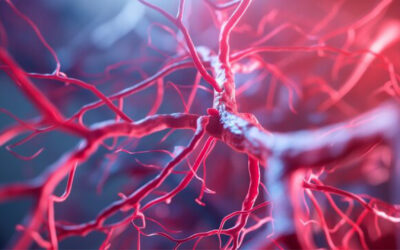
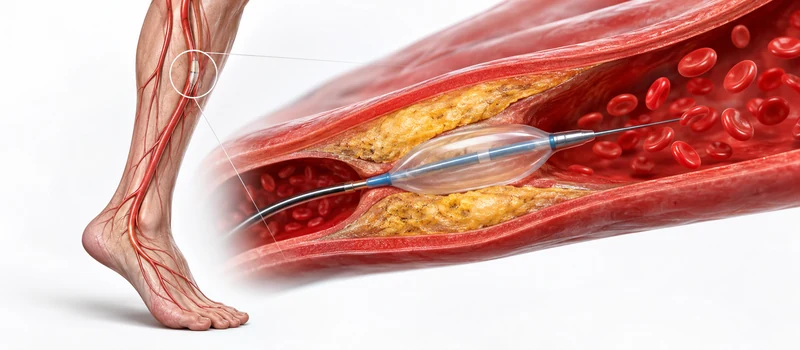
Peripheral Artery Disease (PAD) develops when arteries that carry blood to the legs become narrowed or blocked, most commonly because of atherosclerosis, a buildup of plaque inside the arteries. As those passages become narrower, the muscles and tissues of the legs may not receive enough oxygen-rich blood.
For some people, PAD causes leg pain or cramping while walking. Others notice numbness, weakness, cold feet, changes in skin color, or wounds on the toes and feet that are unusually slow to heal. More advanced disease can threaten tissue health and, in severe cases, increase the risk of limb loss.
The encouraging news is that treating a blocked artery does not always require traditional open surgery. Today, minimally invasive procedures for Peripheral Artery Disease can help restore circulation through a small access point in the skin, often allowing patients to recover more quickly than they would after open vascular surgery.
When Does PAD Need More Than Medication and Lifestyle Changes?
Not everyone diagnosed with PAD immediately needs a procedure.
Treatment often begins by addressing the factors contributing to vascular disease. That may include stopping smoking, controlling diabetes, managing blood pressure and cholesterol, taking prescribed medications, following a structured walking or exercise program, and making heart-healthy dietary changes.
These steps remain important even if a procedure eventually becomes necessary because PAD is not simply a blockage in one artery. It is part of a broader cardiovascular disease process.
For some patients, however, symptoms continue despite appropriate medical management. A person may still have significant pain when walking, struggle to complete normal daily activities, or develop a wound that will not heal because there is not enough blood reaching the foot.
At that point, restoring blood flow directly may become an important part of treatment.
How Minimally Invasive PAD Treatment Works
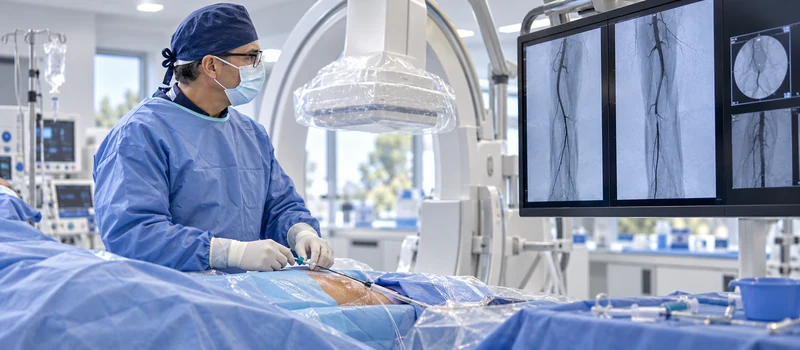
Endovascular treatment allows a vascular specialist to work inside the blood vessel rather than reaching the artery through a large surgical incision.
The physician typically enters the vascular system through a small puncture and guides thin instruments called catheters through the blood vessels. Imaging helps the specialist locate narrowed or blocked areas and determine how best to improve circulation.
The exact procedure depends on where the blockage is located, how long it is, the amount and type of plaque present, the patient's symptoms, and their overall health.
At Washington Vascular Specialists, PAD treatment is individualized rather than approached as a one-size-fits-all procedure.
Angioplasty for Peripheral Artery Disease
Balloon angioplasty is one of the established minimally invasive treatments used to open narrowed arteries.
During angioplasty, a thin catheter with a small balloon is guided to the narrowed portion of the artery. Once properly positioned, the balloon is inflated to widen the artery and improve the pathway for blood flow. The balloon is then deflated and removed.
For the patient, the goal is straightforward: get more blood past the blockage and into the tissues that need it.
Improved circulation may help reduce PAD-related walking symptoms and, when poor arterial blood flow is contributing to a chronic foot wound, can provide the tissue with the oxygen and nutrients it needs for healing.
Stenting: Helping an Artery Stay Open
Sometimes angioplasty alone does not provide the desired result. In selected cases, the physician may place a stent, a small mesh-like device that supports the artery from the inside.
After the narrowed area has been opened, the stent remains in the artery to help maintain blood flow.
Stenting is not automatically necessary for every PAD patient or every blockage. The decision depends on the anatomy of the affected artery, the characteristics of the lesion, and how the artery responds during treatment.
This is one reason a thorough vascular evaluation is so important. Two patients can have similar symptoms yet require very different treatment strategies.
Atherectomy: Removing Plaque From the Artery
Another option for selected PAD patients is atherectomy.
Rather than simply widening the artery, atherectomy uses a specialized catheter to remove or reduce plaque within the vessel. It may be performed on its own or combined with balloon angioplasty and, when appropriate, stenting.
Certain blockages—particularly those with significant plaque or calcification—can be more challenging to treat. Having several endovascular techniques available gives vascular specialists the ability to tailor the procedure to the patient's individual disease.
Washington Vascular Specialists offers minimally invasive PAD treatments including angioplasty, stenting, and atherectomy as part of its endovascular approach to restoring lower-extremity circulation.
What Are the Benefits of Minimally Invasive PAD Procedures?
For the right patient, one of the biggest advantages is avoiding the larger incisions associated with traditional bypass surgery.
Because endovascular procedures are performed through a small access site, patients may experience less disruption to surrounding tissue and a shorter recovery period. Many procedures can also be performed in an outpatient setting, depending on the patient's medical needs and the complexity of the disease.
But convenience is not the only goal.
Successful treatment is about helping a patient get back to the parts of life that PAD has taken away—walking farther with less discomfort, remaining independent, helping a stubborn wound heal, or reducing the threat that severely limited circulation poses to the foot or leg.
That patient-centered goal is especially important for individuals with diabetes and chronic wounds, where PAD may be one piece of a much more complicated health picture.
PAD, Chronic Wounds, and Limb Preservation
A wound on the foot or toe needs adequate circulation to heal. If PAD significantly reduces that blood supply, even excellent wound care may not be enough until the underlying circulation problem is addressed.
This is why Washington Vascular Specialists' approach extends beyond treating leg pain. The practice provides care for Peripheral Artery Disease, vascular wounds, unhealed foot wounds, toe ulcers, leg pain and cramping, and pain while walking, with a focus on identifying the vascular problem behind the symptoms.
Washington Vascular Specialists also supports the Lower Extremity Amputation Prevention (LEAP) program, emphasizing early detection and treatment of circulation problems that may contribute to limb loss in people with vascular disease and diabetes.
Restoring blood flow when medically appropriate can therefore be about much more than relieving discomfort. For certain patients, it becomes an important part of wound healing and limb preservation.
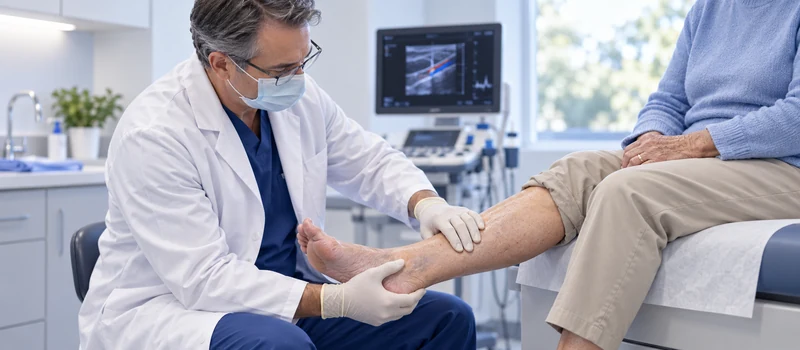
Experienced PAD Care at Washington Vascular Specialists
Washington Vascular Specialists brings together physicians with expertise across endovascular intervention and vascular surgery.
Mubashar Choudry, MD, FACC, the practice's founder, specializes in endovascular intervention and interventional cardiology. The physician team also includes vascular surgeons Donald Wilkerson, MD, and Sajid Shah, MD, along with cardiovascular and thoracic surgeon Andrei Gursky, MD and the practice's advanced practice providers.
This depth of experience matters because PAD is different from one patient to another. The best treatment may involve risk-factor management and exercise, a minimally invasive endovascular procedure, vascular surgery, wound care, or a combination of approaches.
The objective is not simply to treat an image on a scan. It is to understand how circulation is affecting the patient's symptoms, mobility, wounds, and overall health and then develop a treatment plan around those needs.
Vascular Care Close to Home
Washington Vascular Specialists provides vascular care at locations throughout the region, including Takoma Park, Frederick, Upper Marlboro, Baltimore, and Germantown, Maryland, as well as Fairfax, Virginia.
Having multiple locations makes it easier for patients with PAD—especially those experiencing walking limitations or chronic wounds—to receive specialized vascular evaluation and ongoing follow-up closer to home.
Take the Next Step Toward Better Circulation
Leg pain every time you walk is not something you should simply learn to live with. Neither is a foot or toe wound that refuses to heal.
If you are experiencing recurring leg cramping with activity, reduced walking ability, changes in your feet, or a slow-healing wound, a vascular evaluation can help determine whether PAD is contributing to the problem.
Schedule a consultation with Washington Vascular Specialists to learn whether a minimally invasive PAD treatment may be appropriate for you. Call 301-891-2500 to begin your evaluation and take the next step toward better circulation, greater mobility, and healthier legs.
Book an AppointmentFrequently Asked Questions About Minimally Invasive PAD Treatment
Is minimally invasive PAD treatment the same as surgery?
Endovascular PAD procedures are different from traditional open bypass surgery. They are generally performed through a small vascular access point using catheters and imaging guidance rather than a large surgical incision. However, open surgery remains an important treatment for some patients, and your vascular specialist will recommend an approach based on your individual condition.
What minimally invasive procedures are used to treat PAD?
Common procedures include balloon angioplasty, stenting, and atherectomy. Depending on the blockage, more than one technique may be used during the same treatment.
How do I know if I need a procedure for PAD?
A procedure may be considered when PAD symptoms significantly interfere with daily life despite appropriate medical therapy and exercise, or when severely reduced circulation contributes to rest pain, tissue damage, or a nonhealing wound. A vascular evaluation is necessary to determine the appropriate treatment.
Can treating PAD help a foot wound heal?
When inadequate arterial blood flow is contributing to poor wound healing, restoring circulation may improve the conditions needed for the wound to heal. Wound care is still important, and treatment often requires coordination between vascular and wound-care professionals.
Can PAD come back after treatment?
PAD is a chronic form of vascular disease. A successfully treated artery does not eliminate the underlying tendency toward atherosclerosis, and arteries can narrow again. Long-term follow-up, medications when prescribed, smoking cessation, exercise, and management of diabetes, cholesterol, and blood pressure remain important.
Where does Washington Vascular Specialists treat PAD?
Washington Vascular Specialists has locations in Takoma Park, Frederick, Upper Marlboro, Baltimore, and Germantown, Maryland, and Fairfax, Virginia. Patients can contact the practice at 301-891-2500 for scheduling and location assistance.