
TREATMENTS & PROCEDURES · MARYLAND & VIRGINIA
Dialysis Access Creation & Maintenance
Reliable vascular access is essential for hemodialysis. Learn about AV fistula and graft planning, vessel mapping, access maintenance and warning signs that require prompt attention.
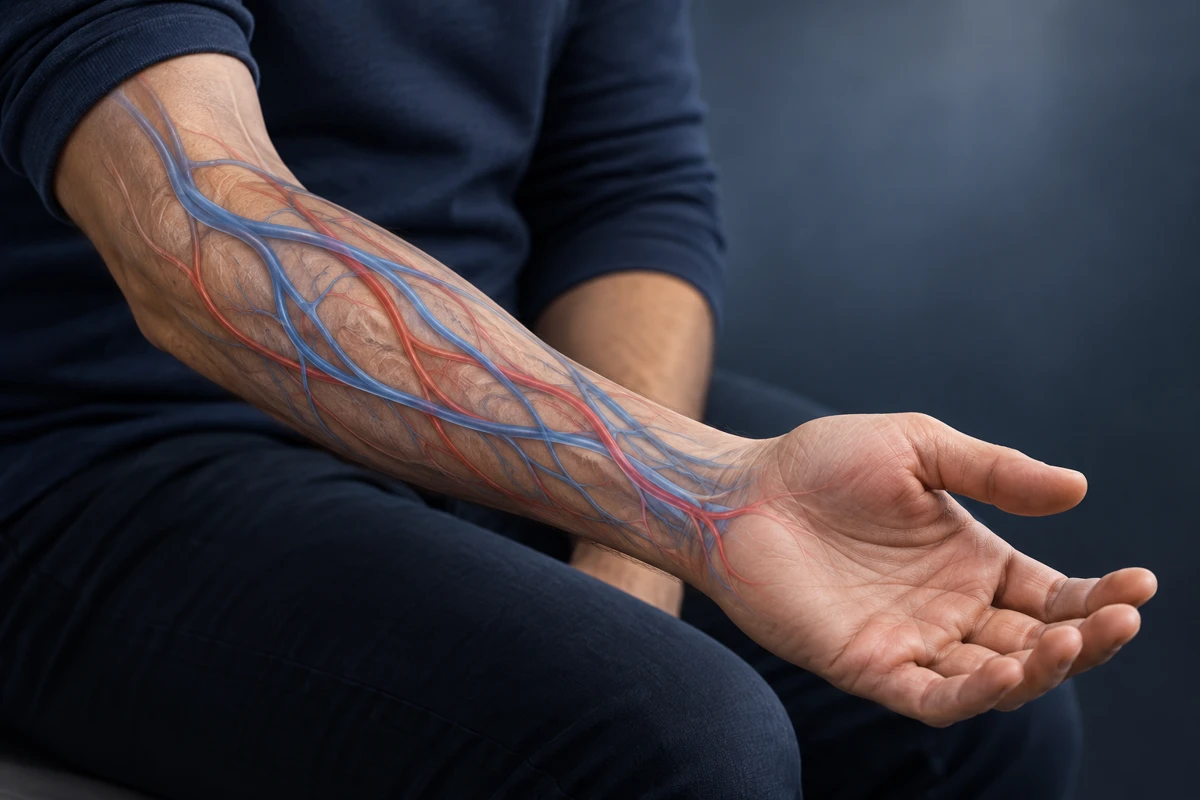
What is hemodialysis vascular access?
A hemodialysis access allows blood to travel between the body and the dialysis machine. An arteriovenous (AV) fistula connects an artery to a vein. An AV graft uses a tube to connect them. A venous catheter is another form of access, often used when immediate or temporary access is needed. Your kidney and vascular teams consider vessel anatomy, timing and the overall kidney-care plan when choosing access.
Plan with your kidney team
Access planning may begin before hemodialysis is needed. Evaluation is also important when an existing access has poor flow, repeated problems during dialysis or signs of infection. Tell the office whether you are planning new access or need help with an existing one.
Creation and maintenance are different
Planning can include examination and ultrasound vessel mapping. Creating a fistula or graft requires a procedure and time before it can be used. Maintenance may involve duplex ultrasound, a fistulogram and, when appropriate, angioplasty or clot-removal treatment to restore access flow. Ask which service is scheduled and how it will coordinate with your dialysis center.
Information your team will need
- Your dialysis center and nephrologist contact details.
- Your dialysis schedule, access history and any recent access imaging or procedures.
- The specific concern: poor flow, bleeding, swelling, pain or a change in the usual vibration.
Protecting your access
Ask when a new access can be used and how it should be checked at home. Follow your team’s instructions about access-arm protection and when to report changes. After maintenance, confirm when dialysis should resume and whether the center needs updated instructions.
Risks and future care
Access can narrow, clot or become infected. Procedures can cause bleeding or vessel injury, and access creation can sometimes reduce blood flow to the hand. Some accesses need additional procedures or replacement. Discuss the plan that fits your long-term needs.
More about this concern
Your questions, answered.
Can a new fistula be used immediately?
Usually it needs time to develop before dialysis needles can be used. Your team determines readiness and whether temporary access is needed.
What is vessel mapping for dialysis access?
Vessel mapping uses ultrasound to assess arteries and veins before access creation. It helps the team understand which vessels may be suitable for a fistula or graft.
Why might an existing fistula or graft need maintenance?
An access can narrow, clot or develop flow problems. Changes during dialysis, prolonged bleeding, swelling or a weaker vibration may lead to examination and imaging.
What if my access stops working?
Contact your dialysis team immediately for instructions rather than waiting for a routine visit or skipping dialysis without guidance.
Let’s talk about your next step.
Our team can help you choose an office in Maryland or Virginia and confirm where your evaluation or procedure will take place.
Patient education sources
General educational information, not a diagnosis or an individual treatment recommendation. Your clinician can explain which options are appropriate for you.