
TREATMENTS & PROCEDURES · MARYLAND & VIRGINIA
Atherectomy
Peripheral atherectomy uses a specialized catheter to remove or modify plaque in selected arteries. Learn how it differs from angioplasty, why it may be proposed for PAD and which tradeoffs to discuss.
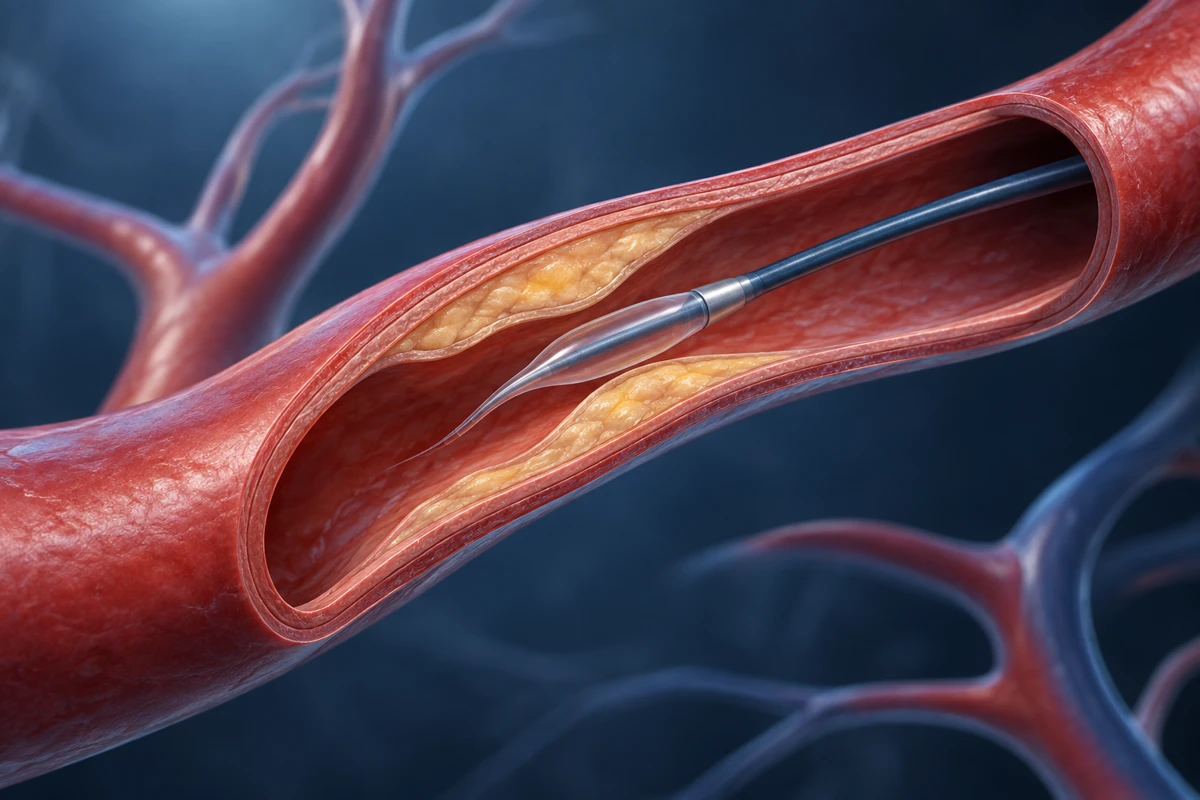
What is peripheral atherectomy?
Atherectomy uses a specialized catheter device to remove or modify plaque from inside an artery. Different devices work in different ways. It may be combined with balloon angioplasty or a stent; it is not required for every arterial blockage and it does not treat plaque throughout the body.
When might atherectomy be considered?
Plaque location and characteristics, including hard calcium, can affect treatment planning. Your specialist considers the artery, symptoms, imaging and overall revascularization plan. Ask why atherectomy is being proposed for your specific case and what evidence supports it compared with balloon treatment, stenting, bypass or continued medical care.
What the procedure involves
The clinician reaches the affected artery through a small access site and uses imaging to guide the device. Additional balloon treatment or stenting may follow. The team checks the result and monitors you after removing the catheter.
Questions for the planning visit
- What problem are we trying to solve, and how will we judge whether treatment helped?
- What are the alternatives, including medical care or another procedure?
- Where will treatment take place, which device is planned, and what preparation will I need?
Your recovery plan
Ask for written instructions covering the access site, activity, transportation, medicines and follow-up. Recovery varies with the full procedure, not just the atherectomy step. Report new or worsening symptoms according to your discharge instructions.
Understand the tradeoffs
Potential concerns include bleeding, artery injury, clotting or plaque fragments traveling downstream. There may also be risks from contrast or accompanying procedures. The artery can narrow again. Discuss both the expected benefit and the possibility of further treatment.
More about this concern
Your questions, answered.
Does atherectomy replace angioplasty?
Not necessarily. It may be one step in a procedure that also uses a balloon or stent.
Is atherectomy appropriate for every PAD blockage?
No. The decision depends on the artery, plaque, symptoms, treatment goals and available alternatives. Ask why it is being recommended for your anatomy.
Does plaque removal cure PAD?
No. Ongoing medical care, risk-factor management and follow-up remain important after a procedure.
Is recovery different from angioplasty?
Recovery depends on the complete procedure, access site and whether balloon treatment or a stent is also used. Follow the written instructions for your specific treatment rather than the name of one device step.
Let’s talk about your next step.
Our team can help you choose an office in Maryland or Virginia and confirm where your evaluation or procedure will take place.
Patient education sources
General educational information, not a diagnosis or an individual treatment recommendation. Your clinician can explain which options are appropriate for you.