
TREATMENTS & PROCEDURES · MARYLAND & VIRGINIA
Vascular Wound Care
Wound care and circulation belong in the same conversation. Learn how vascular evaluation can identify artery or vein problems that may keep a leg or foot ulcer from healing.
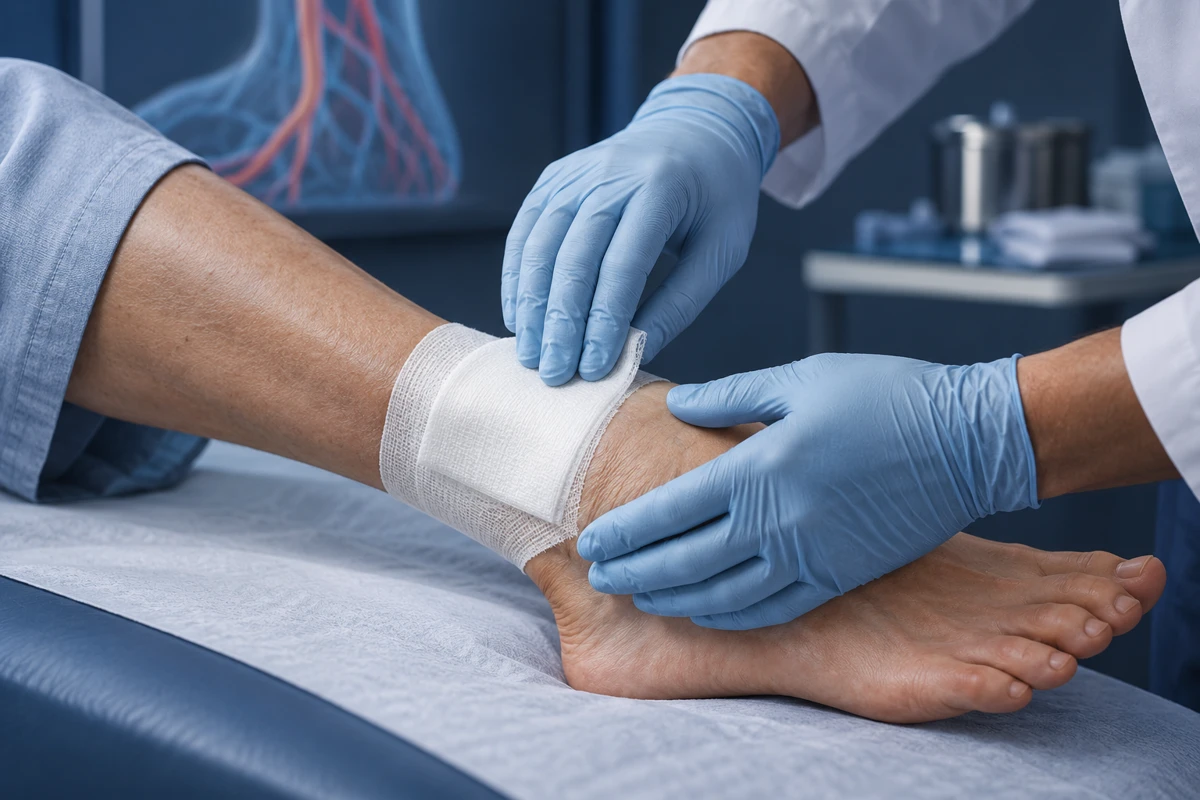
Vascular wound care starts with circulation
Vascular wound care focuses on how reduced arterial blood flow or high pressure in the leg veins contributes to a wound. Arterial ulcers, venous leg ulcers and diabetes-related foot wounds can have different needs. The plan addresses the wound while determining whether an artery or vein problem is slowing healing.
Types of circulation-related wounds
- Arterial or ischemic ulcers can develop when narrowed arteries limit oxygen-rich blood reaching the skin, often affecting the foot or toes.
- Venous leg ulcers commonly occur near the ankle when long-term vein pressure damages the skin.
- Diabetes-related foot ulcers may involve reduced sensation, pressure and poor circulation at the same time.
Who should ask about an assessment?
A persistent leg or foot sore, recurring ankle wound, or wound in a person with diabetes or known circulation disease deserves medical attention. You do not need to decide which type of wound you have before asking for help.
What vascular wound evaluation may include
- Examine the wound, skin and pulses and document the wound so progress can be followed.
- Use ankle or toe pressure testing, arterial duplex ultrasound or venous ultrasound when the clinical question calls for it.
- Determine whether treatment to improve arterial blood flow or reduce harmful vein pressure should be part of the broader wound plan.
Bring the full picture
Bring previous wound records, the dressings you use or their names, a medication list and details of current home care. Tell the team about mobility limits or difficulty reaching the wound. Ask who will coordinate care between visits.
Healing and follow-up
Wound healing usually requires repeated assessment rather than a single treatment. Follow the specific dressing and pressure-relief instructions you receive. For venous wounds, compression may be part of care after circulation is assessed. It should not be started indiscriminately when arterial flow is poor.
How vascular care fits into the complete wound plan
Correcting a circulation problem does not replace dressings, pressure relief, infection treatment, diabetes care or podiatry. Vascular specialists coordinate with the clinicians managing those parts of treatment so each recommendation addresses a specific barrier to healing.
What to discuss
Ask what improvement should look like and what happens if healing stalls. Risks depend on the treatment and may include discomfort, bleeding or skin irritation. Persistent poor circulation or infection can prevent healing and may require a different care plan.
More about this concern
Your questions, answered.
How is vascular wound care different from general wound treatment?
Vascular wound care concentrates on arterial blood flow and venous pressure. General wound treatment covers the complete plan, including dressings, pressure relief, infection management and coordination with other clinicians.
Can I use the same dressing for every wound?
No. Dressing choices depend on the wound, drainage, skin and care goals. Follow the plan for your wound rather than substituting products without advice.
Do all vascular wounds need compression?
No. Compression is often used for venous disease, but arterial circulation and other conditions must be assessed before choosing it.
Does every vascular wound require a procedure?
No. The examination and circulation testing help determine whether a vascular procedure could support healing. Other parts of wound care remain important with or without a procedure.
Let’s talk about your next step.
Our team can help you choose an office in Maryland or Virginia and confirm where your evaluation or procedure will take place.
Patient education sources
General educational information, not a diagnosis or an individual treatment recommendation. Your clinician can explain which options are appropriate for you.