
CONDITIONS · MARYLAND & VIRGINIA
Vascular Disease: Symptoms, Evaluation & Care
Vascular disease is an umbrella term for conditions affecting arteries and veins. Identifying which part of the circulation is involved helps determine the right tests, specialist and treatment plan.
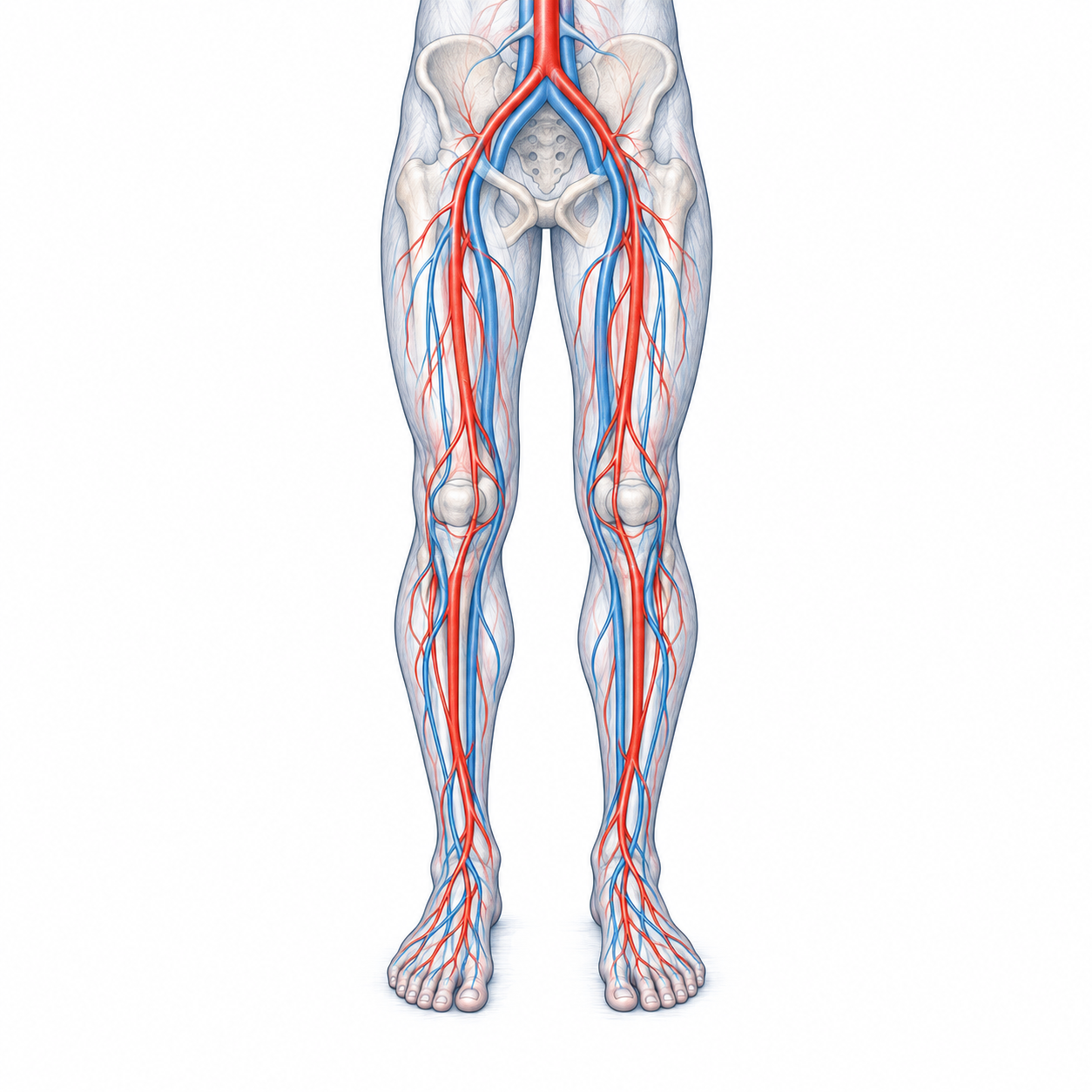
What is vascular disease?
The vascular system includes arteries that carry blood away from the heart and veins that return it. Vascular disease is not one diagnosis: peripheral artery disease, carotid narrowing, aneurysms, blood clots and venous insufficiency affect different vessels and create different risks. The location and type of problem guide the evaluation.
How are artery and vein problems different?
Artery disease can reduce blood flow to muscles, skin and organs. Vein disease can interfere with blood returning toward the heart and may lead to swelling, aching, visible veins or skin changes. A blood clot in a deep vein is different from plaque narrowing an artery. Similar-looking symptoms can have different causes, so treatment should not begin with assumptions.
What symptoms may suggest a vascular problem?
- Leg aching, cramping or heaviness that begins during walking and improves with rest.
- A foot that is colder or paler than the other, pain at rest or a wound that heals slowly.
- Persistent swelling, heaviness, visible veins or skin changes around the ankle.
- New one-sided swelling, pain, warmth or redness, which needs prompt assessment for a possible blood clot.
How is vascular disease evaluated?
A vascular assessment combines your symptoms, medical history and examination with selected testing. Pulse checks, ankle or toe pressures and duplex ultrasound can answer different artery or vein questions. CT, MR or catheter-based imaging may be considered when more detail is needed. Not every risk factor or symptom requires every test.
How is vascular disease treated?
Treatment depends on the diagnosis and severity. A plan may include cardiovascular risk management, prescribed medicines, monitoring, compression for selected vein conditions, or a procedure to improve blood flow or treat a vein problem. Compression and exercise recommendations are not interchangeable across conditions, and a vascular diagnosis does not automatically mean surgery.
Prepare for a focused vascular visit
Bring a current medication list, previous vascular reports and details about when symptoms begin and what changes them. Mention diabetes, kidney or heart disease, tobacco exposure, previous clots and prior vascular procedures. Ask which vessel or condition is being evaluated, what each test can show and who will coordinate related care.
More about this concern
Your questions, answered.
Is vascular disease the same as cardiovascular disease?
The terms overlap, but they are not identical. Cardiovascular disease includes heart and blood-vessel conditions. Vascular disease more specifically describes disorders of arteries, veins and other parts of the circulation.
Does every vascular problem need a procedure?
No. Monitoring, risk-factor management, medicines or condition-specific conservative care may be appropriate. A procedure is considered when its expected benefit outweighs its risks.
Do I need vascular screening if I have risk factors but no symptoms?
Not automatically. Screening recommendations depend on the condition, your history and whether a test is likely to change care. Ask what specific question a proposed test is intended to answer.
Can I tell whether my symptoms come from an artery or a vein?
The pattern can offer clues, but symptoms often overlap. An examination and selected testing may be needed before starting treatments such as compression or a walking program.
Let’s talk about your next step.
Our team can help you choose an office in Maryland or Virginia and confirm where your evaluation or procedure will take place.
Patient education sources
General educational information, not a diagnosis or an individual treatment recommendation. Your clinician can explain which options are appropriate for you.