
TREATMENTS & PROCEDURES · MARYLAND & VIRGINIA
Endovenous Ablation
Endovenous ablation is an ultrasound-guided treatment for selected superficial veins with abnormal backflow. Learn how radiofrequency or laser vein ablation may fit into care for chronic venous insufficiency and varicose veins.
What is endovenous ablation?
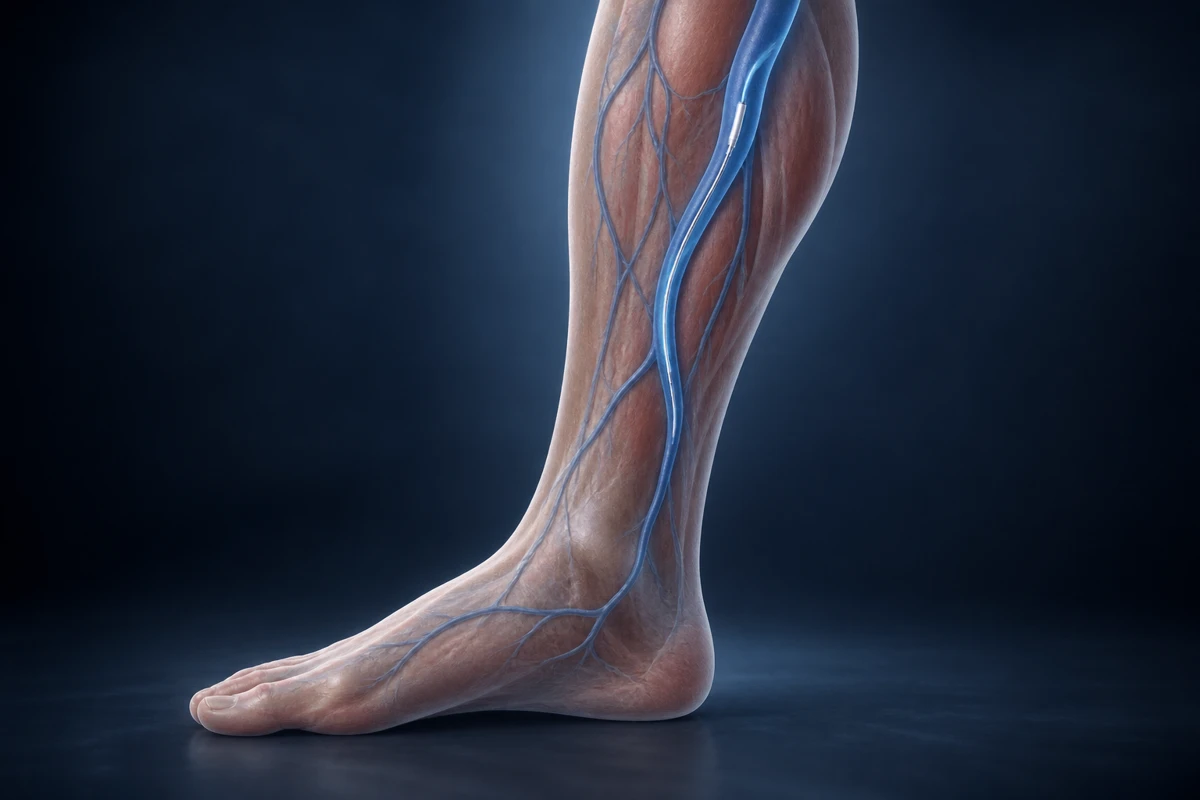
Endovenous thermal ablation uses radiofrequency or laser energy through a catheter to close an abnormal superficial vein. Blood is redirected through other functioning veins. This treats venous reflux and is different from opening an arterial blockage or treating a deep-vein blood clot.
Who may be considered for vein ablation?
Symptoms and a duplex ultrasound showing abnormal vein-valve function guide candidacy. A clinician may discuss ablation for venous reflux associated with aching, heaviness, swelling, skin changes or a venous ulcer. Conservative care or other vein treatments may be alternatives. A visible vein alone does not determine the treatment plan.
A look at the procedure
Ultrasound guides catheter placement. Local anesthetic numbs the treatment area and surrounding tissue. Energy is applied as the catheter is withdrawn, closing the targeted vein. Your team will explain the planned technique.
Before your visit
Bring your vein ultrasound results if testing was performed elsewhere. Ask which vein would be treated, why that vein matters, and whether additional treatments may be needed. Confirm medication instructions, transportation and any prescribed stockings before procedure day.
After treatment
Walking, activity limits, compression and follow-up ultrasound may be part of your instructions. Bruising and tenderness can occur. Your clinician should explain when to resume work, strenuous exercise and travel based on your situation.
What to weigh
Ablation may improve vein-related symptoms, but results vary. Risks include bleeding, infection, nerve irritation, vein inflammation and blood clots. Visible branches or future vein problems may need separate treatment.
More about this concern
Your questions, answered.
Will every visible vein disappear?
Not necessarily. Ask which symptoms and veins the proposed treatment is meant to address and whether a staged plan is expected.
Is endovenous ablation the same as sclerotherapy?
No. Ablation closes a selected refluxing vein with thermal energy delivered through a catheter. Sclerotherapy injects medicine into selected veins. They may address different parts of a vein-treatment plan.
How soon can I walk after vein ablation?
Walking is commonly part of recovery, but activity, travel and compression instructions vary. Follow the written guidance for your procedure.
Is this covered by insurance?
Coverage depends on your plan, clinical findings and its requirements. Confirm benefits and any authorization or conservative-treatment requirements before scheduling.
Let’s talk about your next step.
Our team can help you choose an office in Maryland or Virginia and confirm where your evaluation or procedure will take place.
Patient education sources
General educational information, not a diagnosis or an individual treatment recommendation. Your clinician can explain which options are appropriate for you.