
TREATMENTS & PROCEDURES · MARYLAND & VIRGINIA
Carotid Artery Stenting
Carotid artery stenting is one treatment option for selected people with carotid stenosis. Learn how imaging, stroke or TIA history, anatomy and overall health shape the choice between medical care, endarterectomy and stenting.
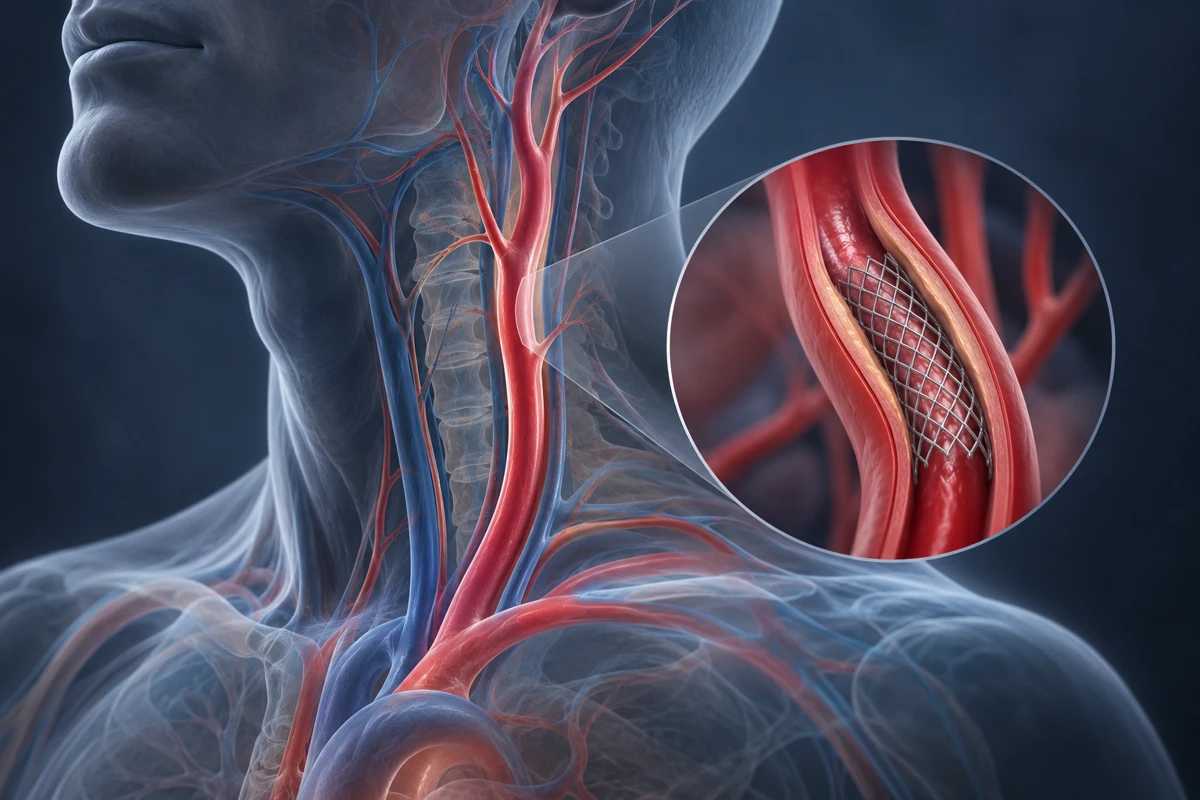
What is carotid artery stenting?
A carotid stent is a mesh support placed inside a narrowed carotid artery supplying the brain. Balloon treatment may accompany placement. The goal is to reduce future stroke risk in appropriately selected patients; it is different from diagnostic carotid ultrasound and from carotid endarterectomy surgery.
When may carotid stenting be considered?
The degree of narrowing, whether a stroke or transient ischemic attack (TIA) has occurred, anatomy, age, other health conditions and procedural risk affect the recommendation. Medication and monitoring or carotid endarterectomy may be preferable. Having carotid narrowing does not automatically mean that a stent is needed.
Planning the approach
Imaging helps the specialist assess the artery and choose an approach. The procedure uses catheter access and protection strategies to reduce the risk of material reaching the brain. Ask your clinician to explain the exact technique and setting planned for you.
Before treatment is scheduled
Bring prior scans and stroke-related records. Ask about the anticipated stroke-prevention benefit, the procedural risks and the alternatives. Get clear instructions about antiplatelet medicines, other prescriptions, fasting, transportation and observation after treatment.
Monitoring after the procedure
Your team monitors neurologic status, blood pressure and the access site. Follow-up and prescribed medicines remain important after discharge. Ask for written activity instructions, the imaging follow-up plan and an after-hours contact number.
A serious decision with real tradeoffs
Possible complications include stroke, bleeding, vessel injury, heart attack, contrast-related problems and death. The artery can narrow again. Your specialist should explain why the expected benefit outweighs these risks in your circumstances.
More about this concern
Your questions, answered.
Is a carotid stent always safer than surgery?
No. The balance depends on symptoms, anatomy, age, health and the risks of each approach. Ask for a comparison of medical management, endarterectomy and stenting for your case.
What is the difference between carotid stenting and endarterectomy?
Stenting treats the narrowing from inside the artery using a catheter and mesh support. Endarterectomy is surgery that opens the artery and removes plaque. Both have important benefits and risks for selected patients.
Does carotid stenosis always cause symptoms?
No. It may be found before symptoms occur. Sudden face drooping, arm weakness, speech trouble or vision loss can signal a stroke or TIA and requires emergency care.
Do I still need medicines afterward?
Yes, prescribed medical care remains essential. Do not stop antiplatelet or other prescribed medicines without guidance from the team managing your treatment.
Let’s talk about your next step.
Our team can help you choose an office in Maryland or Virginia and confirm where your evaluation or procedure will take place.
Patient education sources
General educational information, not a diagnosis or an individual treatment recommendation. Your clinician can explain which options are appropriate for you.