
TREATMENTS & PROCEDURES · MARYLAND & VIRGINIA
Treatment of Wounds
A chronic or non-healing wound needs a plan built around its cause. Learn how dressings, pressure relief, infection care, circulation and coordinated follow-up can work together.
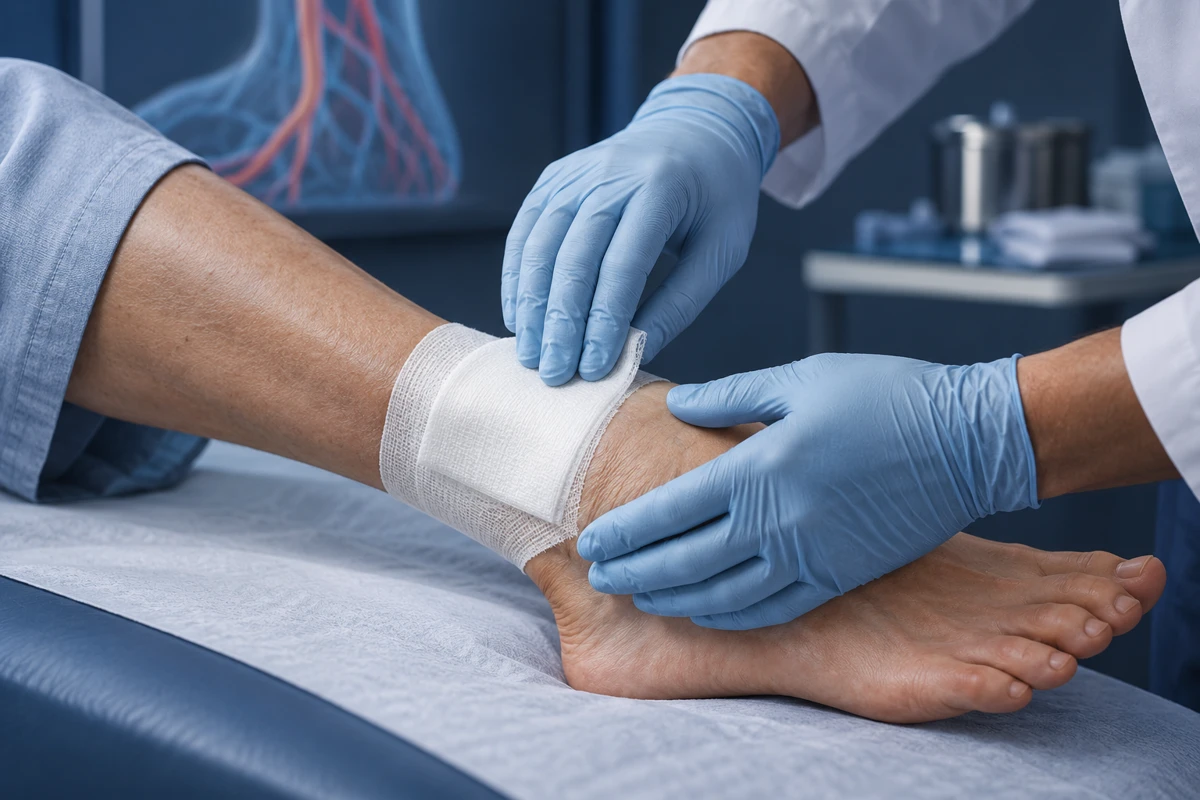
Treatment begins with the reason healing has slowed
A chronic or non-healing wound may be affected by pressure, reduced sensation, infection, diabetes, poor arterial blood flow or high vein pressure. More than one factor may be involved. The treatment plan should explain what is slowing healing and how each recommendation addresses it.
Types of wounds that may need coordinated treatment
- Diabetic foot ulcers or other foot wounds in a person with reduced sensation.
- Venous leg ulcers, arterial ulcers and wounds affected by poor circulation.
- Pressure ulcers caused by repeated pressure or limited mobility.
- Non-healing surgical wounds and wounds that repeatedly break down.
Who should ask about wound treatment?
- People with a foot or leg sore that is not improving after several days of appropriate care.
- People with diabetes, reduced sensation or known circulation disease who notice a new wound.
- People whose existing wound changes in color, drainage, odor, size or discomfort.
What your treatment plan may include
- Wound assessment and a review of circulation, sensation, pressure and signs of infection.
- An individualized dressing plan and instructions for protecting or offloading the area.
- Debridement—the removal of unhealthy or dead tissue by a trained clinician—when appropriate.
- Treatment of infection when present and vascular treatment when circulation is limiting healing.
- Coordination with podiatry, primary care, diabetes care and other wound professionals.
Follow-up is part of treatment
Ask when the wound should be rechecked, who changes dressings and whom to call if it worsens. Healing progress is assessed over time; a fixed result or timeframe cannot be guaranteed. Keep circulation follow-up and other medical care connected.
Bring your current care instructions
Share previous wound measurements, vascular studies, medications and the dressings you are using. Ask the team to clarify the purpose of each recommendation and how to protect the wound between visits.
More about this concern
Your questions, answered.
What is a chronic non-healing wound?
It is a wound that is not progressing as expected and needs clinical assessment. The timeline varies with the wound, health conditions and treatment, so do not wait for a fixed number of weeks when a wound is worsening or you have diabetes, reduced sensation or poor circulation.
What is debridement?
Debridement removes unhealthy or dead tissue so a clinician can better assess and treat the wound. The method depends on the wound and should be performed or directed by a qualified professional.
How is this different from vascular wound care?
Treatment of wounds describes the complete care plan, including dressings, pressure relief, infection management and coordination. Vascular wound care focuses on how artery or vein problems affect healing and whether circulation treatment should be part of that plan.
Will I always need a circulation procedure?
No. Testing and the wound assessment guide that decision. Pressure relief, dressings and other medical care may still be needed whether or not a procedure is recommended.
Let’s talk about your next step.
Our team can help you choose an office in Maryland or Virginia and confirm where your evaluation or procedure will take place.
Patient education sources
General educational information, not a diagnosis or an individual treatment recommendation. Your clinician can explain which options are appropriate for you.