
CONDITIONS · MARYLAND & VIRGINIA
Ulcers on Toes
An ulcer on a toe is an open sore that may be slow to heal or easy to overlook. Evaluation considers pressure, sensation, infection and whether the toe has enough blood flow for healing.
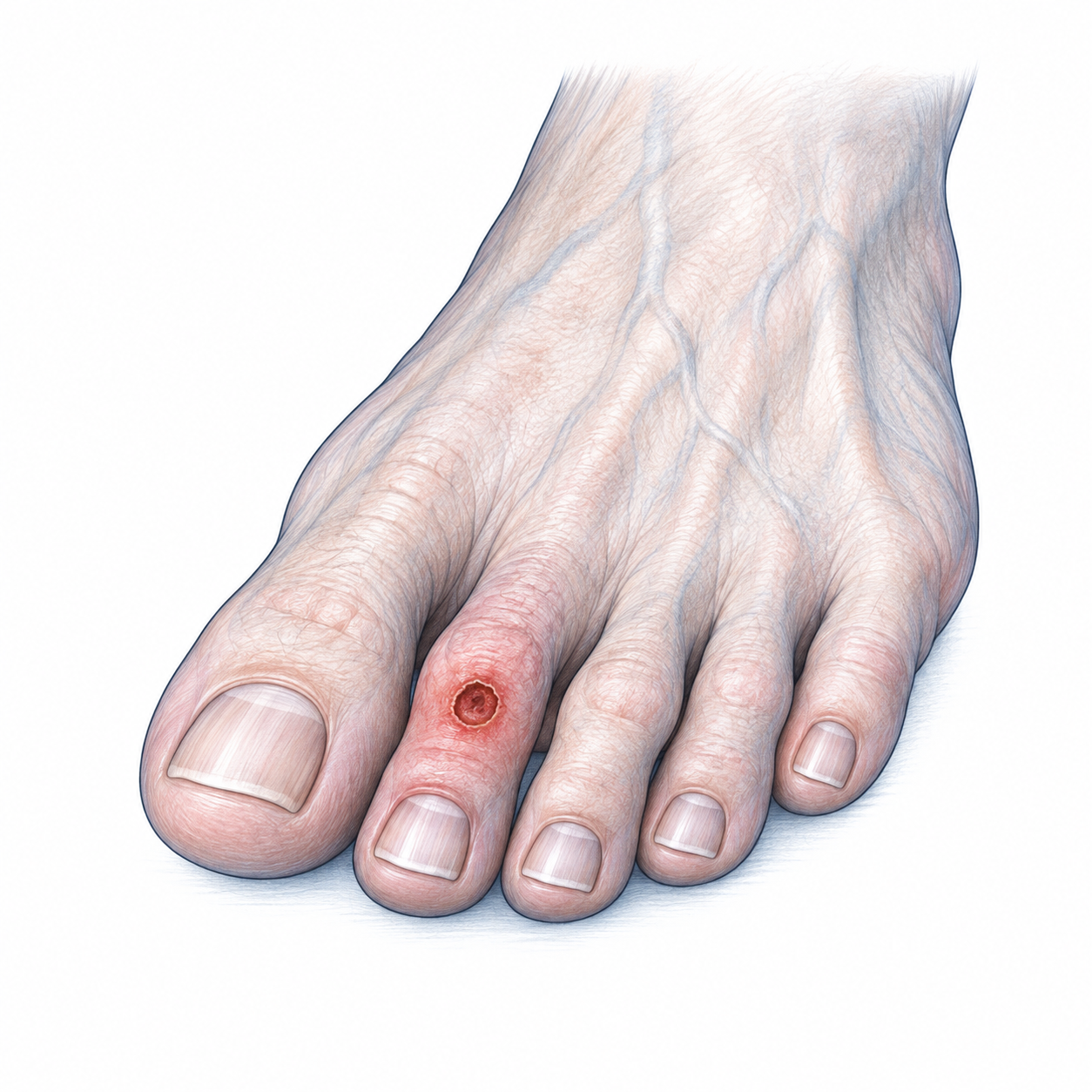
What is a toe ulcer?
A toe ulcer is an open sore or area of skin breakdown. It may begin with rubbing, pressure, a blister, a cut or another injury. Diabetes-related nerve damage can reduce sensation, making the wound painless, while poor arterial blood flow can slow healing. The appearance or amount of pain cannot show the full severity by itself.
Why do ulcers develop on toes?
Repeated pressure from footwear or foot shape, reduced sensation, diabetes and poor circulation can contribute to toe ulcers. Infection may develop after the skin opens and can make the problem more serious. More than one factor is often present, so treatment should address the wound and what is preventing it from healing.
Which changes need prompt attention?
- A new open sore, blister or damaged area on a toe.
- Increasing redness, warmth, swelling, drainage, odor or pain.
- Black, blue, pale or rapidly changing tissue color.
- Fever, chills, spreading redness or a foot that becomes cold or numb.
How is a toe ulcer evaluated?
A clinician examines the whole foot, documents the wound’s location, size and depth, and checks for infection, pressure points and reduced sensation. Pulse checks and tests such as an ankle-brachial index, toe-pressure measurement or ultrasound may be considered when poor blood flow is suspected. Imaging or laboratory testing may be needed if deeper infection is a concern.
What can toe-ulcer treatment include?
Treatment depends on the cause and may include an individualized dressing plan, pressure relief or offloading, infection treatment, diabetes care and professional removal of unhealthy tissue. If testing shows inadequate arterial blood flow, a vascular procedure may be considered. Do not cut away tissue, substitute wound products or start compression without instructions for your specific wound and circulation.
Protect the toe between visits
Follow the dressing and offloading instructions you receive and avoid walking barefoot. Check the foot daily, including areas that do not hurt. Bring previous wound measurements or photos, vascular test results, your medication list and the names of products already used. Ask who to call if the wound changes between appointments.
More about this concern
Your questions, answered.
How long does a toe ulcer take to heal?
Healing varies with blood supply, wound depth, infection, repeated pressure and other health conditions. Progress should be measured over time; a specific healing date cannot be promised from appearance alone.
Is a painless toe ulcer safe to leave alone?
No. Reduced sensation can hide injury and infection. Have the wound assessed and follow the care plan even if it does not hurt.
When should I worry about an ulcer on my toe?
Seek prompt care for increasing redness, warmth, swelling, drainage, odor, fever or worsening pain. Black tissue or a suddenly cold, pale, numb or severely painful foot needs urgent or emergency assessment.
Can I treat a toe ulcer entirely at home?
Home care should follow a clinician’s plan. Do not debride the wound yourself or rely on an over-the-counter corn or callus product, which can damage skin and delay appropriate treatment.
Let’s talk about your next step.
Our team can help you choose an office in Maryland or Virginia and confirm where your evaluation or procedure will take place.
Patient education sources
General educational information, not a diagnosis or an individual treatment recommendation. Your clinician can explain which options are appropriate for you.