
Vascular Disease and Other Health Conditions: How Your Heart, Kidneys, and Blood Sugar Are Connected
Discover how blood vessel health connects heart disease, diabetes, blood pressure and kidney health, and why coordinated care matters.
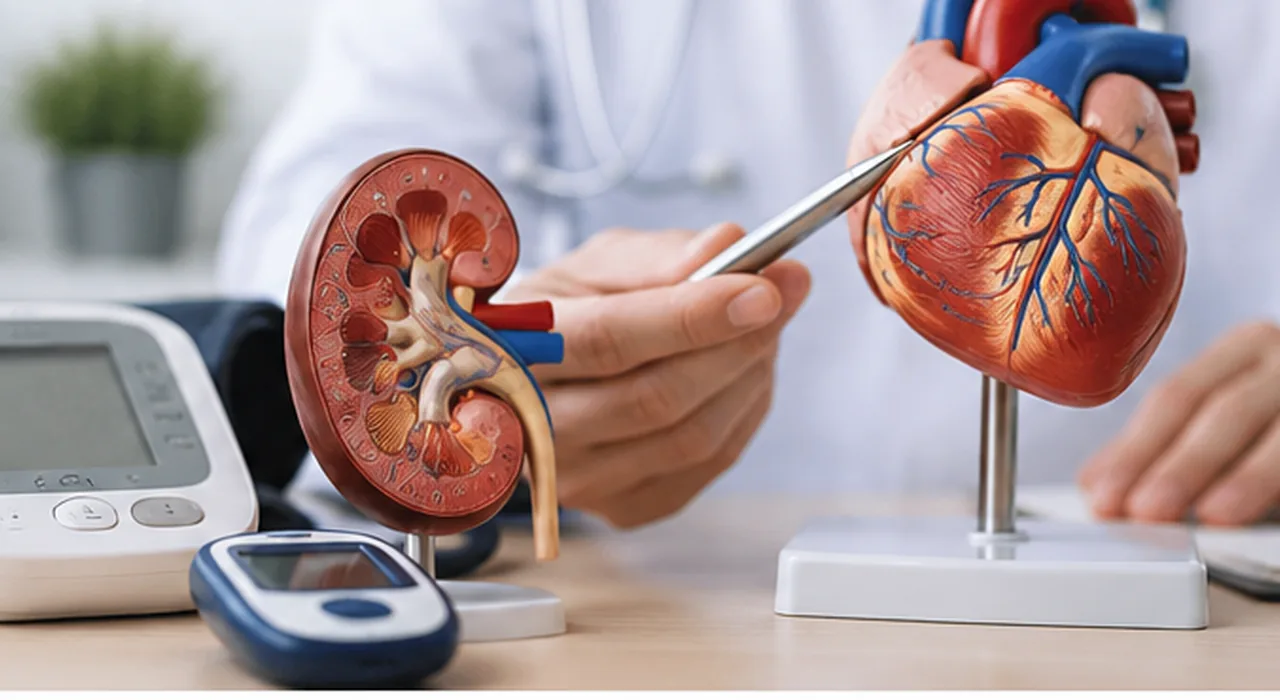
Your Blood Vessels Connect More Than You Might Think
When someone is diagnosed with high blood pressure, diabetes, or kidney disease, the conversation often focuses on that particular condition. A patient with diabetes monitors blood sugar. Someone with high cholesterol watches their diet and medications. A person with kidney disease may need regular blood tests.
What isn’t always obvious is how closely these conditions are connected.
Your vascular system carries blood throughout your body, supplying oxygen and nutrients to your heart, brain, kidneys, muscles, and other tissues. When blood vessels become damaged or narrowed, the effects may extend beyond one organ.
This is why vascular disease is often connected to other chronic health conditions, including diabetes, heart disease, hypertension, and chronic kidney disease.
Understanding these relationships can help patients recognize potential risks earlier and make more informed decisions about their health.
How Vascular Disease Affects Different Parts of the Body
Think of your circulatory system as a network of roads connecting different parts of a city. When traffic becomes restricted along one route, the problem may indicate a larger issue affecting the network.
Something similar can happen with the arteries.
Atherosclerosis develops when plaque accumulates inside artery walls. Over time, this buildup can narrow blood vessels and restrict blood flow. The process may affect arteries supplying different organs, although having a blockage in one location does not automatically mean blockages exist everywhere.
For example, Peripheral Artery Disease (PAD) affects arteries supplying the legs, while coronary artery disease affects arteries serving the heart. Carotid artery disease involves arteries supplying blood toward the brain.
These conditions share several risk factors, including diabetes, high cholesterol, smoking, and high blood pressure.
Recognizing those shared risks is important because treatment should address more than the symptoms of a single blocked artery.
Diabetes and Vascular Disease: A Relationship That Deserves Attention
Diabetes and vascular disease frequently occur together.
When blood glucose remains elevated over time, it can damage blood vessels and contribute to inflammation and atherosclerosis. This increases the likelihood of developing circulation problems, including PAD.
Diabetes may also damage nerves in the feet, reducing the ability to feel pain or recognize an injury.
Consider someone who develops a small blister on a toe. If that person has reduced sensation, the injury may go unnoticed. If PAD is also limiting blood flow, the wound may struggle to heal.
This combination explains why foot care and circulation assessments are important parts of managing diabetes.
Controlling blood sugar is essential, but protecting vascular health may also require monitoring cholesterol, blood pressure, circulation, and changes in the feet.
High Blood Pressure and Cholesterol: Two Important Vascular Risk Factors
High blood pressure and elevated cholesterol can quietly affect blood vessel health for years.
When blood pressure remains elevated, the increased force against artery walls contributes to vascular damage. High levels of certain cholesterol particles, particularly LDL cholesterol, contribute to plaque buildup.
Together, these conditions increase the likelihood of atherosclerosis and cardiovascular complications.
The challenge is that neither high blood pressure nor high cholesterol necessarily causes obvious symptoms.
Someone may feel perfectly healthy while changes gradually develop inside their arteries.
This is why following prescribed treatment and regularly reviewing blood pressure and cholesterol levels with a healthcare provider are important even when no discomfort is present.
The Connection Between Peripheral Artery Disease, Heart Disease, and Stroke
Many patients associate PAD exclusively with leg pain or difficulty walking. However, PAD can also be an important warning sign about overall cardiovascular risk.
People with PAD have an increased risk of coronary artery disease, heart attack, and stroke because atherosclerosis can affect arteries in several areas of the body.
That does not mean every person with PAD will experience a heart attack or stroke. It means their cardiovascular risk deserves appropriate attention.
Managing PAD may involve more than improving blood flow to the legs. Physicians also consider cholesterol-lowering treatment, blood pressure control, prescribed antiplatelet or other medications, smoking cessation, and overall cardiovascular risk reduction.
Certain patients may also need evaluation for other vascular conditions based on their symptoms and medical history.
Sudden facial drooping, arm weakness, speech difficulty, or other possible stroke symptoms require immediate emergency care. Chest pain suggestive of a heart attack also requires emergency evaluation.
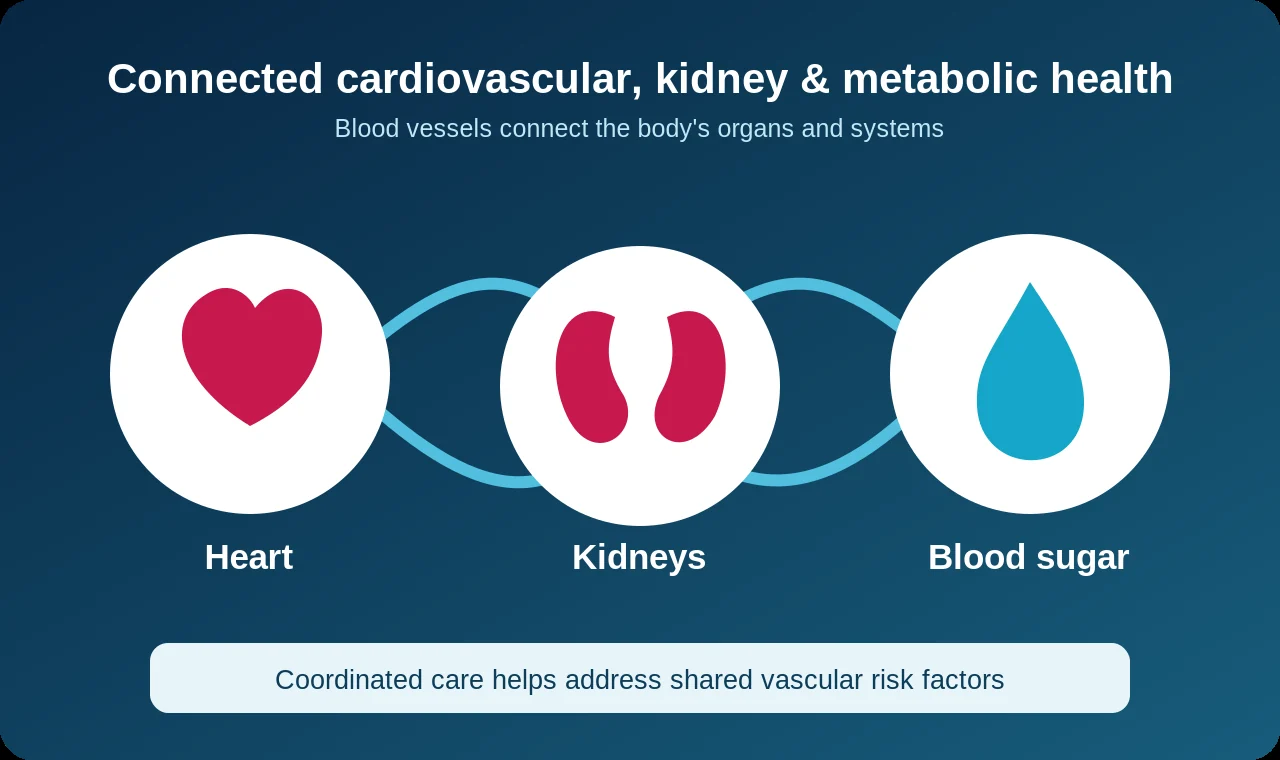
How Kidney Disease and Circulation Problems Are Connected
The kidneys depend on an extensive network of small blood vessels to filter waste and regulate fluid balance.
Over time, diabetes and high blood pressure can damage those blood vessels, contributing to chronic kidney disease (CKD).
The relationship also works in the other direction. People with chronic kidney disease face higher cardiovascular risks, including an increased likelihood of PAD.
These connections have become an important focus of preventive medicine. The American Heart Association describes the relationship among cardiovascular, kidney, and metabolic health as cardiovascular-kidney-metabolic health, or CKM health.
For patients, the message is practical: managing one condition often helps protect other parts of the body.
A person with diabetes and kidney disease, for example, may benefit from coordinated care that considers kidney function, blood pressure, cardiovascular risk, and circulation rather than treating each issue independently.
Are Leg Swelling and Venous Disease Connected to Other Conditions?
Not every vascular problem involves narrowed arteries.
Chronic Venous Insufficiency (CVI) occurs when veins have difficulty returning blood toward the heart, potentially causing leg swelling, heaviness, skin discoloration, or venous ulcers.
Although CVI differs from PAD and coronary artery disease, its symptoms can overlap with other health problems.
Leg swelling, for example, may be associated with venous disease, heart failure, kidney problems, certain medications, or other medical conditions.
This is why persistent swelling should not automatically be attributed to poor circulation without identifying the cause.
An accurate diagnosis helps ensure patients receive treatment appropriate for their particular condition.

Why Coordinated Medical Care Matters
When several health conditions affect the same patient, good communication between healthcare providers becomes especially important.
A primary care provider may monitor diabetes, cholesterol, blood pressure, and kidney function. A cardiologist may evaluate heart-related symptoms and cardiovascular risk. A vascular specialist focuses on identifying and treating problems involving arteries and veins.
For suspected PAD, testing may include an Ankle-Brachial Index (ABI) and vascular ultrasound. Kidney health may be assessed through blood and urine tests ordered by the appropriate clinician.
Not every patient needs every test. Recommendations depend on symptoms, medical history, risk factors, and clinical findings.
The goal is to understand the patient’s overall health rather than evaluating each symptom in isolation.
Practical Steps to Protect Your Vascular and Overall Health
Taking care of your blood vessels does not require changing everything overnight.
Regular physical activity, appropriate nutrition, smoking cessation, and following prescribed medications can make a meaningful difference. Patients with diabetes should also follow their blood sugar management plans, while those with hypertension or elevated cholesterol should continue recommended monitoring and treatment.
Pay attention to changes that are easy to dismiss, such as recurring leg cramps when walking, unusual swelling, colder feet, skin discoloration, or wounds that are slow to heal.
Small symptoms sometimes provide an opportunity to recognize a circulation problem before complications develop.
Comprehensive Vascular Care at Washington Vascular Specialists
At Washington Vascular Specialists, we understand that vascular disease rarely exists in isolation. Patients often arrive with several medical concerns, and understanding how those conditions may affect circulation is an important part of developing an individualized treatment plan.
Mubashar Choudry, MD, FACC, specializes in endovascular intervention and interventional cardiology. The physician team also includes vascular surgeons Donald Wilkerson, MD, and Sajid Shah, MD, along with cardiovascular and thoracic surgeon Andrei Gursky, MD.
The practice provides evaluation and treatment for conditions including Peripheral Artery Disease, carotid artery disease, vascular wounds, leg pain and swelling, and other circulation-related disorders.
Washington Vascular Specialists also supports the Lower Extremity Amputation Prevention (LEAP) program, which focuses on identifying and treating circulation problems that can contribute to limb loss.
Patients can access care in Takoma Park, Frederick, Upper Marlboro, Baltimore, and Germantown, Maryland, and Fairfax, Virginia.
Your Vascular Health Is Part of Your Bigger Health Picture
A diagnosis of diabetes, high blood pressure, heart disease, or kidney disease may mean paying closer attention to your circulation.
You don’t need to wait for a serious complication before discussing your vascular health with a medical professional.
If you’re experiencing leg discomfort, circulation-related symptoms, or a wound that isn’t healing, a vascular evaluation may help identify whether blood vessel disease is contributing to the problem.
Washington Vascular Specialists can help you better understand your circulation and determine whether specialized vascular treatment should be part of your overall healthcare plan.
Call 301-891-2500 or request an appointment online to schedule a consultation and take an informed step toward protecting your long-term vascular health.
Frequently Asked Questions About Vascular Disease and Other Health Conditions
Can vascular disease increase the risk of a heart attack or stroke?
Yes. People with atherosclerotic conditions such as PAD have an increased risk of heart attack and stroke. Managing cardiovascular risk factors is an important part of their care.
Why are people with diabetes more likely to develop vascular disease?
Over time, elevated blood sugar can damage blood vessels and contribute to atherosclerosis. Diabetes also frequently occurs alongside high blood pressure and abnormal cholesterol levels, which further increase vascular risk.
Is kidney disease connected to poor circulation?
Yes. Kidney disease and cardiovascular conditions share several risk factors, including diabetes and hypertension. People with chronic kidney disease also have an increased risk of PAD and other cardiovascular problems.
Does having high cholesterol mean I have blocked arteries?
Not necessarily. High LDL cholesterol increases the risk of plaque buildup, but it does not confirm the presence of an arterial blockage. Your healthcare provider can assess your overall cardiovascular risk and determine whether additional testing is appropriate.
Can treating PAD improve my overall health?
Appropriate PAD management can improve symptoms and help reduce cardiovascular and limb-related risks. Treatment may include medication, structured exercise, lifestyle changes, and procedures when necessary. PAD care should also address related cardiovascular risk factors.
When should I see a vascular specialist?
Consider a vascular evaluation if you experience recurring leg pain during walking, persistent swelling, unusual changes in the color or temperature of your feet, or slow-healing wounds. Your primary care provider can also help determine whether a vascular consultation is appropriate based on your medical history.
Related Vascular Health Topics
Explore these related Washington Vascular Specialists articles for additional information:
- The Link Between Diabetes and Peripheral Artery Disease
- Peripheral Artery Disease Is More Than Just Leg Pain
- The Connection Between Vascular Health and Wound Healing
- How Regular Check-ups Can Help Prevent Vascular Disease
More in this topic
View all →
How Regular Check-ups Can Help Prevent Vascular Disease
Many vascular diseases develop gradually over time, often without obvious warning signs during their early stages. Conditions such as Peripheral Artery Disease (PAD), Chronic Venous Insufficiency…
Read article →
Exploring the Latest Treatment Options for Vascular Diseases
Vascular disease is often associated with blocked arteries, especially in conditions like Peripheral Artery Disease (PAD). But the reality is far more complex. Today’s treatment approaches go beyond…
Read article →
Early Signs of Vascular Disease: What to Look Out For
Vascular disease has become one of the most prevalent health concerns worldwide. According to reports from the World Health Organization (WHO) and the Centers for Disease Control and Prevention…
Read article →